Sai Kung rewards visitors all year, but the experience shifts dramatically with the calendar — the same hillside that bakes you in August becomes a crisp, glassy-aired ridge walk in November. Knowing the rhythm of the seasons is the single biggest thing you can do to make a trip here better, whether you are chasing surf, cool hiking weather, harbour festivals or the geopark’s clearest views.
This guide walks through the year season by season, with a comparison table, weather and typhoon notes, and crowd-avoidance tips so you can match your trip to what you actually want to do.
The short answer
If you only remember one thing: autumn (late October to December) is the best all-round time to visit Sai Kung. It pairs comfortable temperatures with low humidity and the clearest skies of the year, which is exactly what you want for hiking, photography and long ferry days. Summer is for the beaches, winter is for quiet cool-weather walks, and spring is green and festive but humid and prone to mist.
Hong Kong has a humid subtropical climate, so the dividing line between seasons is less about temperature extremes and more about humidity, visibility and rain. That distinction matters enormously in a place built around the outdoors.
Autumn (October–December): the sweet spot
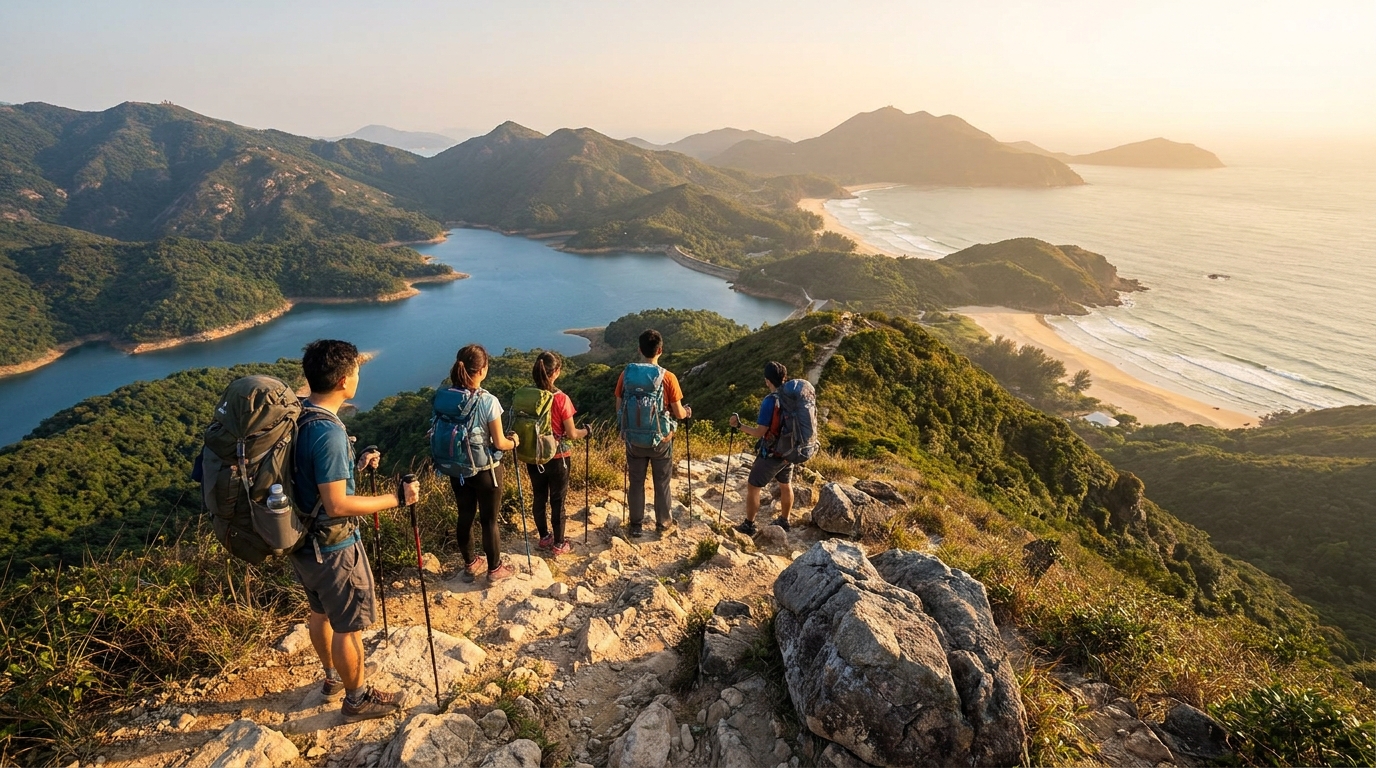
This is prime time in Sai Kung, and it is not close. As the summer monsoon retreats, the humidity lifts, the skies turn a deep clear blue, and daytime temperatures settle into a near-perfect range for walking. The pale rhyolitic hexagonal columns at the High Island Reservoir East Dam look their sharpest under low-humidity light, and the long ridgeline of MacLehose Trail Sections 1 & 2 is finally comfortable to attempt end-to-end.
- Hiking: the best window of the year. Carry water still — autumn afternoons can be warm — but the killing humidity is gone.
- Geopark and photography: visibility is at its annual peak. This is when the sea-cliffs, Po Pin Chau and the columns photograph best.
- Beaches: the sea stays warm enough to swim well into November, so you can combine a hike with a dip.
The one catch is crowds. Autumn weekends, especially around public holidays, fill the kaito ferries and the East Dam taxi queue. Go early in the day or, better, go midweek.
Winter (January–February): cool and quiet
Sai Kung in winter is crisp, often clear, and gloriously empty. Daytime temperatures are cool and the air is dry, which makes for excellent hiking — many locals consider a cold, bright winter day the finest walking weather of all. The trade-off is a sea that has turned too cold for most swimmers, so winter is a season for land, not water.
This is the time to wander Sai Kung Town without the queues, to take the short ferry to Yim Tin Tsai and have the salt-pan island almost to yourself, or to tackle a steeper objective like Sharp Peak while the cool air keeps you from overheating. Occasional cold fronts can drop temperatures sharply and bring grey, drizzly “monsoon” days, so pack a light insulating layer and a windproof for exposed ridges. Stargazers also get the year’s longest, clearest nights — see our stargazing guide.
Spring (March–May): green but humid, and full of festivals
Spring is the most beautiful and the most temperamental season. The hills turn lush and green, but warming air over a still-cool sea breeds fog and mist, and some days the views simply vanish into white. Humidity climbs steadily toward the summer peak, and the famous Hong Kong “wet” feeling sets in.
What spring has that no other season offers is festival energy. The Tin Hau Festival, honouring the goddess of the sea, brings the harbour to life around April or May with decorated fishing boats, lion dances and temple celebrations — a wonderful time to feel Sai Kung’s living fishing-village culture. The islands and trails are quieter than in autumn, and the seafood is excellent. If you come in spring, build in flexibility: keep a town-and-seafood plan ready for the misty days and save the big ridge walks for the clear ones.
Summer (June–September): beach season
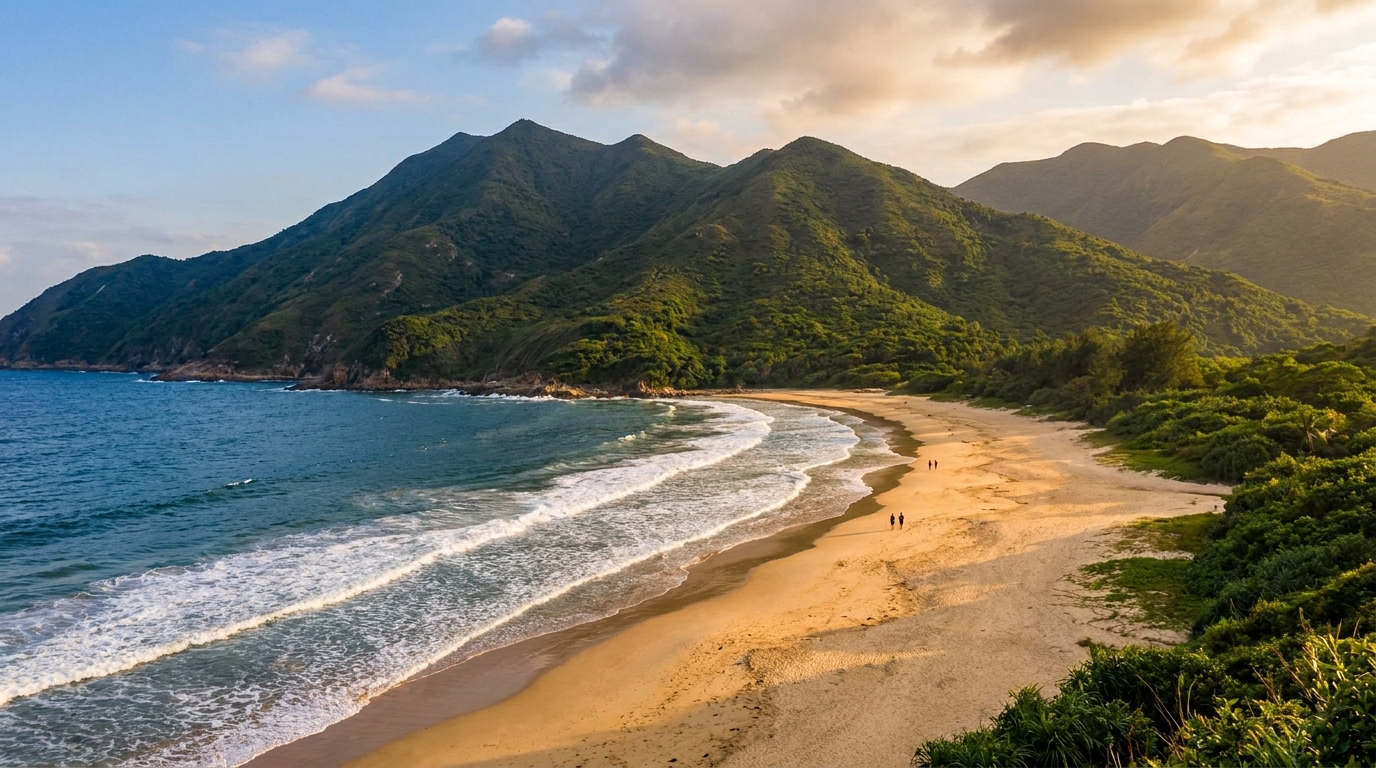
Summer is hot, intensely humid, and the only season when the water is the main event. This is when Tai Long Wan, Sai Wan, Hap Mun Bay and the beaches of Clearwater Bay Country Park come into their own. It is also, however, typhoon season, and that changes how you must plan.
When a tropical cyclone approaches, the Hong Kong Observatory raises warning signals. At higher signals the kaito and speedboat ferries to the islands and remote beaches stop running, and you can be stranded or unable to leave. Heavy rainstorm (amber, red, black) warnings make hill streams flash-flood and trails dangerously slippery. The rules of a summer trip:
- Check the Observatory before you commit to any island or remote-beach plan, and again before the last boat home.
- Hike at dawn and be off exposed ridges by late morning; heatstroke is a real risk.
- Carry far more water than feels necessary — there are no shops on the trails.
- Remember the Tai Long Wan beaches are unpatrolled with strong rip currents; respect them, especially when summer swells pick up.
The reward for the heat is warm, swimmable water, long daylight and dramatic afternoon-storm skies.
At a glance
| Season | Months | Best for | Watch out for |
|---|---|---|---|
| Autumn | Oct–Dec | Hiking, geopark, photography, swimming | Weekend and holiday crowds |
| Winter | Jan–Feb | Cool hikes, the town, islands, stargazing, solitude | Cold sea, occasional grey cold fronts |
| Spring | Mar–May | Tin Hau Festival, green hills, quieter trails | Humidity, fog that kills views |
| Summer | Jun–Sep | Beaches, swimming, long days | Heat, typhoons, suspended ferries, rip currents |
Avoiding the crowds
Sai Kung’s busiest moments are predictable, which makes them easy to dodge:
- Go midweek. Saturday and especially Sunday are the peak; a Tuesday in the same week can feel like a different place.
- Start early. Arrive in town before mid-morning to beat the brunch-and-ferry rush at the pier; the first East Dam taxis and first kaito sailings are the calmest.
- Avoid public holidays and the days bracketing them if you possibly can.
- Save iconic spots for off-peak seasons. The East Dam and Tai Long Wan in a quiet winter or spring weekday are a world apart from an autumn Sunday.
Putting it together
There is no truly bad time to visit Sai Kung — only different versions of it. Come in autumn for the definitive all-round trip, in winter for cool solitude, in spring for green hills and festivals, and in summer for the beaches, with one eye always on the weather. Whichever you choose, start with our transport guide to plan your journey in, then pick a season-appropriate plan from a one-day itinerary or a seafood feast by the water.
Frequently asked questions
What is the best month to visit Sai Kung?
Late October to December is ideal — cool, dry and clear, with comfortable temperatures and low humidity that suit both the MacLehose Trail and the geopark. November is many regulars’ favourite.
Is summer too hot for Sai Kung?
Summer is hot and humid with the risk of typhoons, but it is the season for the beaches. Hike at dawn, carry plenty of water, and watch the Hong Kong Observatory warnings that can suspend kaito ferries to the islands.
When is Sai Kung least crowded?
Weekdays in winter (January–February) are the quietest. The town, the trails and the kaito ferries all empty out once the cold sea ends the swimming season and the holiday peaks pass.