Step off the bustling Sai Kung Town waterfront, follow the smell of sandalwood smoke, and you will eventually arrive at a small, red-pillared hall facing the harbour. This is a temple to Tin Hau, the Goddess of the Sea — and for centuries it was the spiritual heart of a community whose entire life turned on the tides.
A district built on the sea
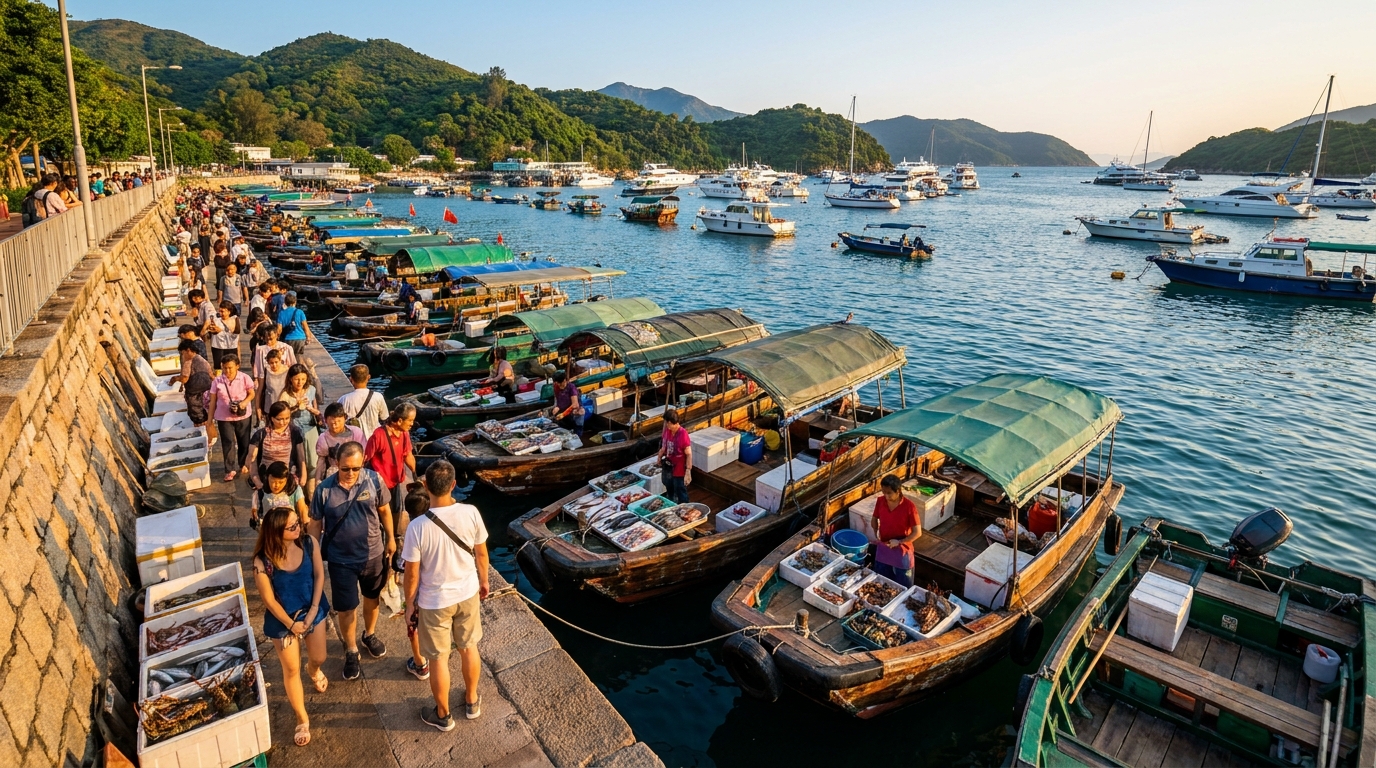
Long before Sai Kung became a weekend escape for hikers and seafood-lovers, it was first and foremost a fishing community. Junks and sampans crowded the harbour; whole families were born, lived and died on the water; and the rhythm of every household was set by the catch, the monsoon and the unforgiving sea. In a world with no weather satellites and no rescue helicopters, the line between a good season and a drowning was terrifyingly thin.
That is the world the Tin Hau temples were built to serve. They are not museum pieces or tourist follies but the original insurance policy, weather forecast and community hall of a maritime people — places where fishermen prayed for calm water and a full net before sailing, and gave thanks when they returned. To understand Sai Kung’s temples is to understand the anxieties and hopes of the people who built them.
Who is Tin Hau?
Tin Hau (天后), literally “Empress of Heaven,” is better known across much of the Chinese-speaking world as Mazu (媽祖). According to tradition she was a real young woman named Lin Moniang, born on the island of Meizhou in Fujian province in the tenth century. The legends describe a gifted, devout girl who could swim expertly, predict the weather, and — in the most famous stories — spiritually rescue sailors caught in storms, even her own father and brothers, while in a trance at home.
After her early death she was said to continue appearing to seafarers in distress, guiding ships through typhoons and reefs. Over the following centuries imperial courts granted her ever-grander titles, raising her from a local sea spirit to a national goddess. Carried south and overseas by Fujianese and Cantonese fishermen and merchants, her cult spread along the entire China coast and across the South China Sea. In Hong Kong, with its hundreds of kilometres of shoreline and islands, she became one of the most widely worshipped deities of all — and nowhere more naturally than in a fishing district like Sai Kung.
Temples around the district
Tin Hau temples and roadside shrines stand close to the Sai Kung waterfront and on several of the outlying islands, almost always facing the water so the goddess can keep watch over boats coming and going. Their placement is the first clue to their purpose: these are working shrines for working sailors, sited where the sea could be seen and the goddess could see the sea.
The waterfront temples
The temples nearest the town are the easiest to visit and the most alive. They sit within a short stroll of the public pier, woven into the fabric of daily life — a place where elderly residents drop in to light incense, where a new boat owner might come to pray for safe voyages, and where festival preparations spill out into the surrounding lanes. Because they are so accessible, the waterfront temples are the best place for a first-time visitor to experience a living Hong Kong folk temple.
The island and village shrines
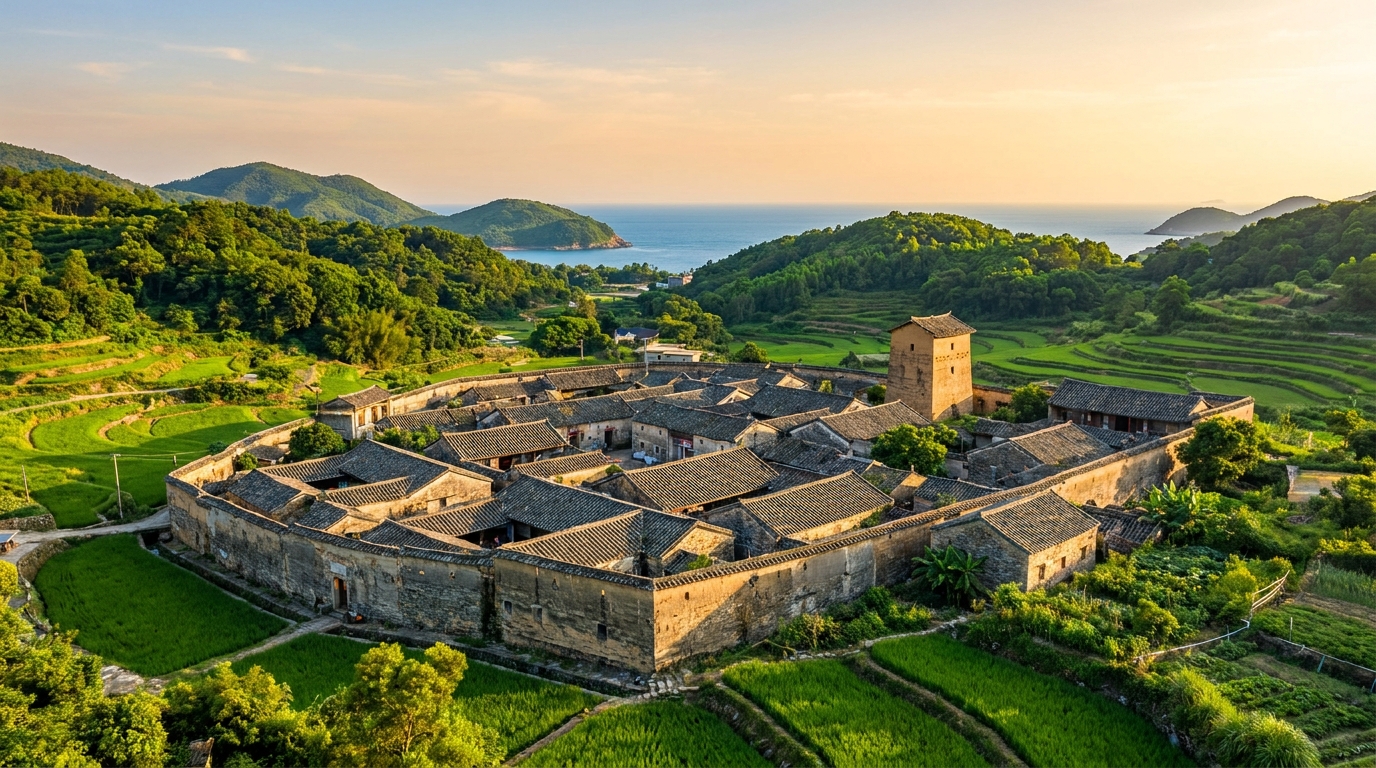
Beyond the town, smaller Tin Hau shrines dot the islands and former fishing hamlets of the district — including the kind of remote, half-abandoned settlements that recall Sai Kung’s older world. Many are humble single halls, some lovingly restored and some weathered by salt air, but all share the same seaward orientation. Visiting them often means combining the temple with a kaito (sampan) hop or a coastal walk, turning a short act of devotion into a small adventure.
Inside the temple: architecture and customs
Step through the threshold of a Sai Kung Tin Hau temple and your senses adjust to a dim, smoky, richly decorated interior. A few features appear again and again:
- The main altar, where Tin Hau sits in serene majesty, her face sometimes blackened by centuries of incense smoke, flanked by guardian generals — most famously “Thousand-Mile Eyes” (Qianliyan) and “Wind-Following Ears” (Shunfeng’er), who help her spot and hear sailors in trouble far out at sea.
- Hanging incense coils, the great green spirals suspended from the ceiling that smoulder slowly for days, carrying worshippers’ prayers skyward long after they have left.
- Honorific plaques and couplets, carved and gilded boards donated by grateful fishing families, guilds and officials over the generations, recording thanks for safe returns and good fortune.
- Ornamental ridges and figurines on the roof, often featuring dragons, fish and scenes from opera, crafted in the colourful Shiwan ceramic tradition.
- Offerings of fruit, roast meats, tea and “paper money,” along with fortune sticks (kau cim) that worshippers shake and interpret to seek the goddess’s guidance.
None of this is staged for visitors. The plaques are real thank-yous, the coils are paid for by real families, and the altar is genuinely tended. That authenticity is precisely what makes these temples worth seeking out.
The Tin Hau Festival
The whole community comes alive for the Tin Hau Festival, held on the 23rd day of the third lunar month — usually falling in April or May — to mark the goddess’s birthday. It is one of Hong Kong’s most colourful folk celebrations, and in a fishing district like Sai Kung it carries special meaning.
| At a glance | Detail |
|---|---|
| When | 23rd day of the 3rd lunar month (Apr–May) |
| Who | Fishing families, temple committees, local residents |
| Sights | Decorated boats, offerings, lion dances, Cantonese opera in some years |
| Mood | Festive, devotional, communal — a living tradition, not a show |
In the days around the festival, fishing boats are dressed with flags and bunting, families carry roast pigs and other offerings to the temples, and the air fills with firecracker smoke and drumming. In some years there are lion dances, processions and a temporary bamboo theatre for Cantonese opera performed to thank the goddess. If you want to witness the maritime soul of the district rather than just its scenery, this is the time to come.
Visiting respectfully
These are sacred, active places of worship, so a little etiquette goes a long way:
- Dress modestly — cover your shoulders and avoid very short shorts.
- Speak quietly and switch your phone to silent.
- Do not point your finger, your feet or your camera directly at the deities.
- Ask before photographing worshippers, and never interrupt someone mid-prayer.
- Step over the raised threshold, not on it — tradition holds that it should not be trodden.
- A small donation for incense is welcome if you wish to light a stick yourself, but never feel obliged.
Move gently, observe more than you photograph, and you will be a welcome guest.
How to get there and what to pair it with
There is no MTR station in Sai Kung. From the city, take KMB bus 92 from Diamond Hill MTR (Exit C2), about 45–60 minutes, or the frequent green minibus 1A from Choi Hung MTR (Exit C2) to Sai Kung Pier, about 20–25 minutes. The waterfront temples are then an easy walk from the pier. See the full getting to Sai Kung guide for details; Octopus is accepted on the buses.
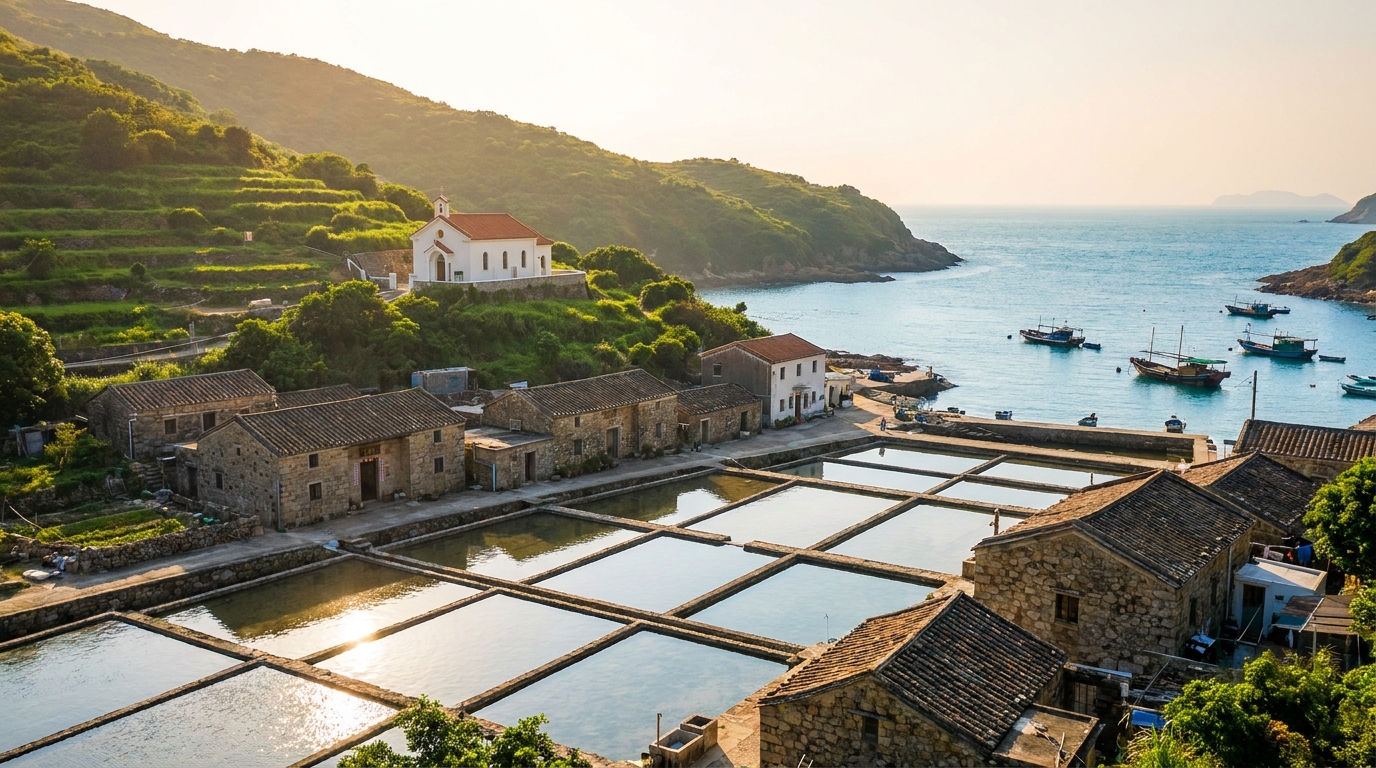
A temple visit slots neatly into a wider day. Combine it with seafood and a harbour stroll in Sai Kung Town; take a short kaito to the salt-pan island of Yim Tin Tsai to see how faith and rural life intertwined; or dig deeper into the people behind the prayers with our guide to the Hakka villages of Sai Kung. However you build your day, let the incense-scented hush of a Tin Hau temple remind you that, beneath the cafés and kayaks, Sai Kung is still a place shaped by the sea.
Frequently asked questions
Who is Tin Hau?
Tin Hau (also known as Mazu) is the Chinese Goddess of the Sea, traditionally believed to protect fishermen and seafarers. Temples in her honour are found throughout Hong Kong’s coastal communities, including all around Sai Kung Town.
When is the Tin Hau Festival?
The Tin Hau Festival falls on the 23rd day of the third lunar month (usually April or May). Fishing communities decorate their boats and bring offerings to the temples, sometimes with lion dances and Cantonese opera.
Can visitors enter the temples?
Yes, visitors are welcome to enter respectfully. Dress modestly, keep your voice low, do not point at the deities, and ask before photographing worshippers. A small donation for incense is customary if you wish to take part.