Most visitors know Sai Kung as a place of boats and beaches. But turn your back on the harbour and look up into the green hills, and you enter a different, older Sai Kung — a landscape of terraced fields, walled hamlets and abandoned stone houses built by the Hakka people who farmed this land for generations.
Who are the Hakka?
The Hakka (客家, literally “guest families”) are a distinct Han Chinese subgroup with their own dialect, customs and architecture. Their name reflects their history: over many centuries they migrated southward through China in successive waves, often settling later than established communities and being given the marginal, hillier land that was left. By the time they reached the southern coast — including what is now Hong Kong — they had a hard-won reputation as resilient, frugal and industrious hill farmers, accustomed to making a living from difficult terrain.
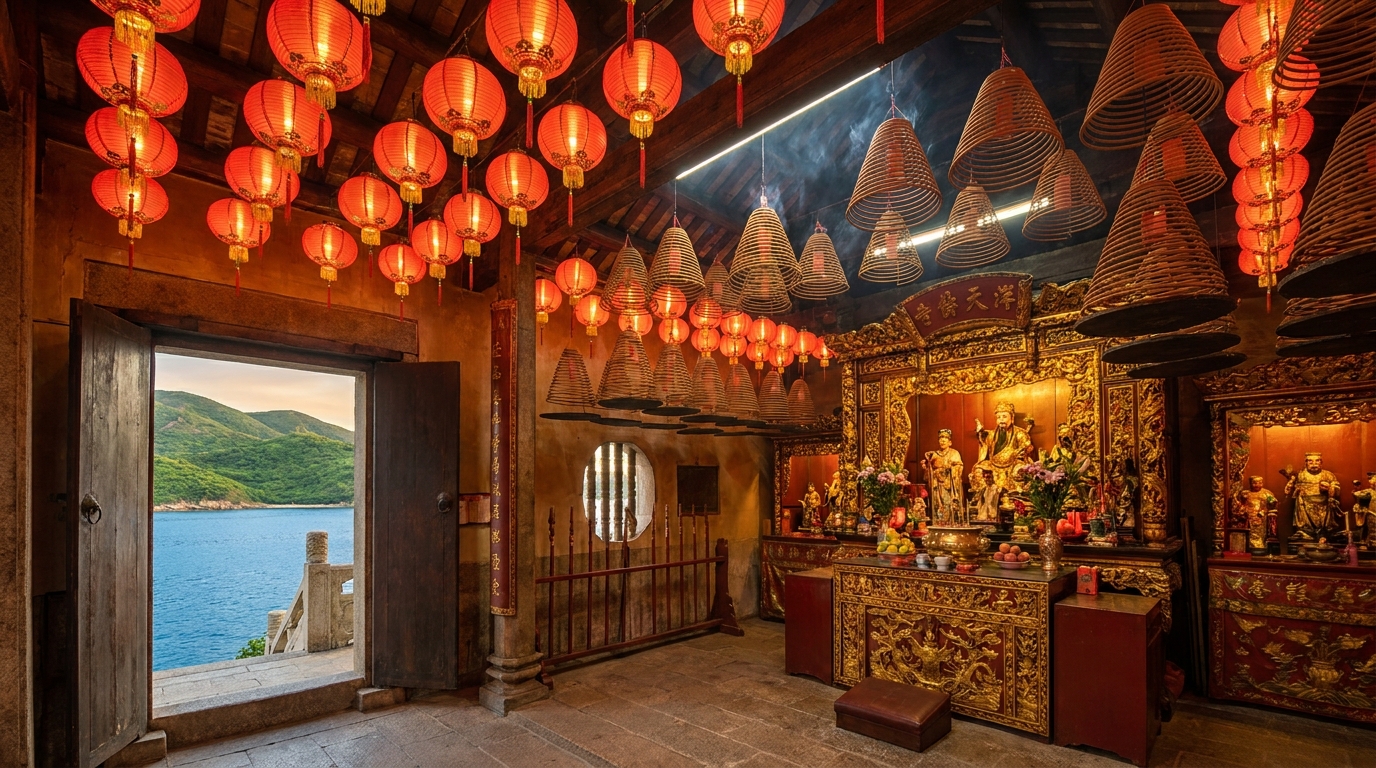
In Sai Kung, the Hakka formed the inland half of the district’s traditional society. While the boat-dwelling Tanka and Hoklo fishing families lived on the water and prayed at the Tin Hau temples, the Hakka cleared the slopes, built villages and worked the land behind the sea. Understanding Sai Kung means understanding both communities — the people of the water and the people of the hills.
Walled and fortified villages
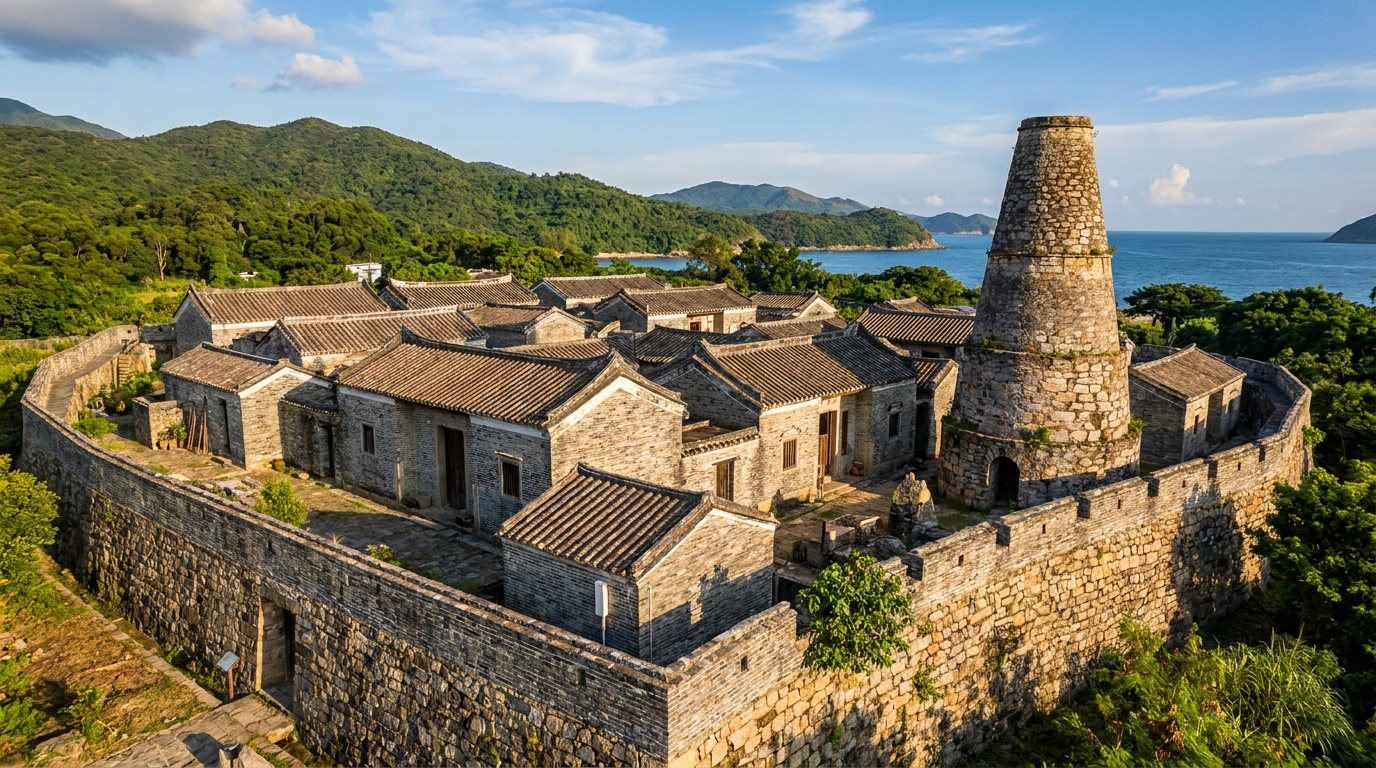
The Hakka built to last and to defend. In an age of pirates, bandits and clan disputes, a village was as much a fortress as a home. Typical Hakka settlements in Sai Kung shared recognisable features:
- A defensive perimeter wall enclosing the houses, with a single guarded gateway.
- A watchtower (碉樓) at a corner, giving a vantage point and a last refuge.
- Rows of terraced houses sharing party walls, often raised above the ground against damp and flood.
- A central ancestral hall for worship and community gatherings.
- Feng shui woods behind the village and an open forecourt in front for drying grain.
This defensive, communal layout is the signature of Hakka heritage, and it survives most completely at the restored Sheung Yiu Folk Museum, where you can walk inside a fully preserved 1840s walled village and read its design at a glance.
How the Hakka lived: farming, salt and lime
Hakka life was built on wringing a living from marginal land, and the people were nothing if not versatile. Their economy rested on several pillars:
| Livelihood | What it involved |
|---|---|
| Rice and vegetable farming | Terraced paddies and dry fields carved into the hillsides |
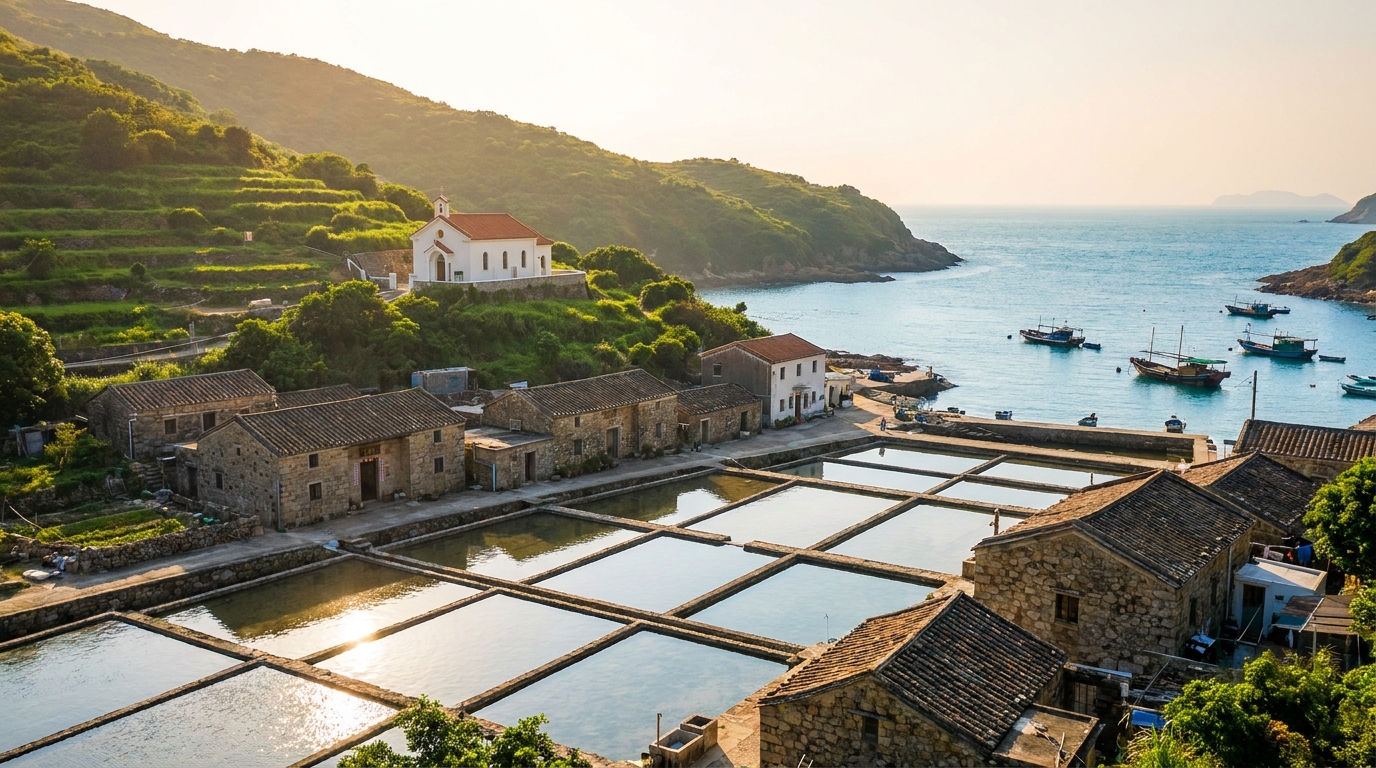
| Salt-making | Coastal salt pans evaporating seawater, as on Yim Tin Tsai |
| Lime-burning | Kilns burning seashells and coral into lime for mortar and fertiliser |
| Fishing and gathering | Inshore fishing, shellfish and woodland foraging to supplement the harvest |
Farming the terraces
The hills around Sai Kung were once laced with terraced fields, painstakingly levelled and walled to grow rice and vegetables. Today most have reverted to grass and woodland inside the country parks, but a keen eye can still spot the old terrace lines on hillsides along trails like the Pak Tam Chung Nature Trail.
Making salt
Where flat coastal ground met seawater, the Hakka built salt pans to evaporate brine into salt — a valuable commodity in pre-refrigeration times. The most famous survivor is Yim Tin Tsai, whose very name means “little salt pan,” where the historic pans have been restored to working order.
Burning lime
Many villages, including Sheung Yiu, made their cash from lime-burning — heating seashells and coral in kilns to produce lime for building mortar, whitewash, fertiliser and tanning. The restored kiln at Sheung Yiu is a rare reminder of this small-scale rural industry.
A faith of their own: the Hakka-Catholic story
Not all Hakka heritage is Buddhist or Taoist. In the 19th century, European missionaries found a receptive audience among some Hakka villages, and a number of communities converted to Catholicism. The clearest legacy is Yim Tin Tsai, a wholly Hakka-Catholic island whose restored St Joseph’s Chapel won a UNESCO Asia-Pacific heritage award. It is a striking reminder that Sai Kung’s history is layered and surprising — a Chinese village topped by a Catholic chapel, surrounded by salt pans.
Abandonment and emigration
The Hakka villages did not fall to disaster but to economic change. From the mid-20th century onward, the hard, low-paid life of hill farming and salt-making simply could not compete with the wages of Hong Kong’s booming city or the opportunities overseas. In particular, large numbers of New Territories villagers emigrated to Britain, many to work in the Chinese restaurant trade, sending money home but never returning to farm.
One by one the terraces went untended, the salt pans silted up, and the villages emptied. By the late 20th century, dozens of Sai Kung hamlets stood silent — roofs collapsing, ancestral halls locked, forests reclaiming the fields. Walking the country parks today, the abandoned stone houses you pass are the quiet monuments of this great rural exodus.
Restoration: bringing the villages back to life
The story does not end in ruin. In recent decades, descendants, churches, the government and community groups have worked to restore and reinterpret key sites so the Hakka legacy is not lost:
- Yim Tin Tsai has been revived as a heritage island, its salt pans, chapel and village houses lovingly restored and reopened to visitors.
- Sheung Yiu Folk Museum preserves an entire fortified village as a declared monument and free museum.
- Smaller efforts continue at scattered villages, with returning families holding ancestral festivals and reopening old houses.
These projects let a way of life that nearly vanished be experienced again, on foot and up close.
Where to see Hakka heritage today
If you want to encounter the land behind the sea, build a day around these stops:
- Sheung Yiu Folk Museum — a complete restored walled village with a lime kiln, reached on the easy nature trail from Pak Tam Chung.
- Yim Tin Tsai — the Hakka-Catholic salt-pan island, a short kaito ride from the Sai Kung pier.
- Country-park trails — watch for terrace lines and ruined houses on routes through Sai Kung East Country Park and beyond.
How to get there
There is no MTR station in Sai Kung, so start by reaching the town. Take KMB bus 92 from Diamond Hill MTR (Exit C2), about 45–60 minutes, or the frequent green minibus 1A from Choi Hung MTR (Exit C2) to Sai Kung Town. From there, a country-park bus serves Pak Tam Chung for Sheung Yiu, and kaito ferries from the public pier serve Yim Tin Tsai. See the full getting to Sai Kung guide for details; Octopus is accepted on the buses.
Walk the harbour, then walk the hills, and you will see the whole of old Sai Kung — the fishing families who looked to Tin Hau, and the Hakka farmers who built a quiet, fortified world among the terraces above.
Frequently asked questions
Who are the Hakka people?
The Hakka (“guest families”) are a Han Chinese subgroup who migrated south over many centuries. In Sai Kung they were the inland farming communities who built walled villages and worked the terraces, salt pans and lime kilns, distinct from the boat-dwelling fishing families.
Where can I see Hakka heritage in Sai Kung today?
The best stops are the restored Sheung Yiu Folk Museum at Pak Tam Chung and the Hakka-Catholic salt-pan island of Yim Tin Tsai, plus countless old village houses dotted through the country parks.
Why were the Hakka villages abandoned?
From the mid-20th century, farming and salt-making could no longer compete with city wages and overseas opportunity. Villagers emigrated, especially to Britain, and the hill villages gradually emptied — a story now told through restored heritage sites.