A short kaito ferry from Sai Kung Town carries you to one of Hong Kong’s most heart-warming restoration stories: Yim Tin Tsai, a tiny island whose name means “little salt field”. Quiet, green and barely a kilometre across, it is a place where a vanished way of life has been coaxed back to the surface — salt pans glinting in the sun, a hillside chapel restored to its former grace, and a community that refused to let its home be forgotten.
A village reborn
For roughly 300 years, a Hakka Catholic community lived and worked here. The earliest settlers — families of the Chan clan — arrived from the mainland and, finding the island ringed by shallow tidal flats, turned to the one resource the sea offered in abundance: salt. They built shallow evaporation pans, channelled seawater across them, and let sun and wind do the rest, harvesting the crystals that formed as the brine concentrated. Salt was a valuable commodity, and for generations it sustained the village, paying for rice, cloth and schooling.
In the 19th century, Catholic missionaries reached the island, and almost the entire village was baptised — an unusual story in a region where Taoist and Buddhist folk traditions dominated. Yim Tin Tsai became, in effect, an island of Hakka Catholics, with its own chapel, its own school and a tightly knit communal life built around the church calendar and the rhythm of the tides.
The 20th century, however, drained the island of its people. Cheaper imported and industrially produced salt undercut the village trade. Young people left for Sai Kung Town, Kowloon and overseas in search of work and education. By the 1990s the salt pans had silted up, the houses stood empty, and the village had fallen silent — one of dozens of Sai Kung settlements abandoned in the post-war decades.
What makes Yim Tin Tsai remarkable is what happened next. Rather than let the island return entirely to scrub, former residents, the Catholic diocese, conservationists and academics joined forces to bring it back to life. Beginning in the early 2000s, the community cleared the overgrown pans, repaired the chapel, reopened village houses as small exhibitions, and built the trails and boardwalks that visitors follow today. It is one of Hong Kong’s clearest examples of heritage-led, community-driven revival.
What to see
The whole island can be walked in a gentle loop, with interpretation panels guiding you between the highlights.
The working salt pans
The restored salt pans are the island’s signature sight and the reason for its name. Volunteers and former villagers re-excavated the fields and brought them back into seasonal production using the original solar-evaporation method. The process is beautifully simple and entirely natural:
- Seawater is admitted to the highest pans at high tide.
- It is moved by gravity through a sequence of shallow, progressively saltier basins.
- Sun and wind evaporate the water, raising the salinity stage by stage.
- In the final crystallisation pans, white salt forms on the surface and is raked up by hand.
Panels explain each step, and depending on the season and weather you may see crystals actually forming. The revival of this craft has earned the project formal heritage recognition and made the pans a living classroom rather than a museum piece.
St Joseph’s Chapel
Set on a small rise above the village, St Joseph’s Chapel is the spiritual and architectural heart of Yim Tin Tsai. The pretty whitewashed church, with its modest bell and arched windows, was carefully restored in a project that won a UNESCO Asia-Pacific Award for Cultural Heritage Conservation — the kind of international recognition usually reserved for far grander monuments. The award honoured not just the physical repair but the way the restoration kept the village’s living traditions intact. The chapel still hosts an annual feast day that draws former residents and their descendants back to the island.
The mangrove boardwalk
A short trail and timber boardwalk lead out across the coastal mudflats and through a belt of mangroves. At low tide this is one of the best places near Sai Kung to watch intertidal life up close: fiddler crabs waving their single oversized claw, mudskippers flicking across the mud, and a chorus of smaller crabs and shellfish. The mangroves also play a quiet ecological role, stabilising the shore and feeding the salt-pan ecosystem.
Heritage exhibitions
Several restored village houses now serve as small exhibitions. Inside you’ll find old farming and salt-making tools, family photographs, Hakka domestic furnishings and displays that piece together the island’s social history. A small heritage centre and café give context to what you’re seeing and a place to rest.
A festival of salt and light
Over the years Yim Tin Tsai has also become known for an arts-and-heritage festival that has periodically transformed the island into an open-air gallery, with installations threaded through the salt pans, village lanes and shoreline. The recurring themes — salt as the island’s lifeblood and light as a symbol of its faith and revival — capture exactly what makes the place special. Events come and go from year to year, so check current listings before planning a visit around any particular programme.
Getting there
Yim Tin Tsai is reached by licensed kaito (sampan) ferry from the Sai Kung public pier, with the most frequent service at weekends and on public holidays. The crossing takes about 15 minutes across sheltered water. Buy your ticket at the pier, pay in cash, and — crucially — note the time of the last return boat, which is posted at the pier and on the island.
| At a glance | Detail |
|---|---|
| Access | Kaito ferry from Sai Kung public pier |
| Crossing time | ~15 minutes each way |
| Best days | Weekends and public holidays (most boats) |
| Payment | Cash |
| Time on island | 1.5–2 hours |
To reach Sai Kung Town from the city in the first place, see the transport guide: there is no MTR station in Sai Kung, so you’ll arrive by bus or minibus before walking to the pier.
Best time to visit
Weekends and public holidays guarantee the most frequent ferries and a livelier village atmosphere, with the café open and exhibitions staffed. For salt-making, the dry, sunny, breezy months of autumn and spring favour evaporation and your best chance of seeing crystals forming. Low tide is the moment for the mangrove boardwalk — check tide tables and try to time your walk accordingly.
Practical tips and accessibility
- The island is small and easily explored in 1.5–2 hours at a relaxed pace.
- Facilities are limited: there is a small café and basic toilets, but bring water, sun protection and a hat, especially in summer.
- Wear comfortable shoes — paths are mostly flat but include some steps and uneven ground around the pans and boardwalk.
- It is a respectful, low-key place: keep noise down near the chapel and don’t disturb the salt pans or wildlife.
- Carry out your rubbish; there is little waste infrastructure on the island.
Make a day of it
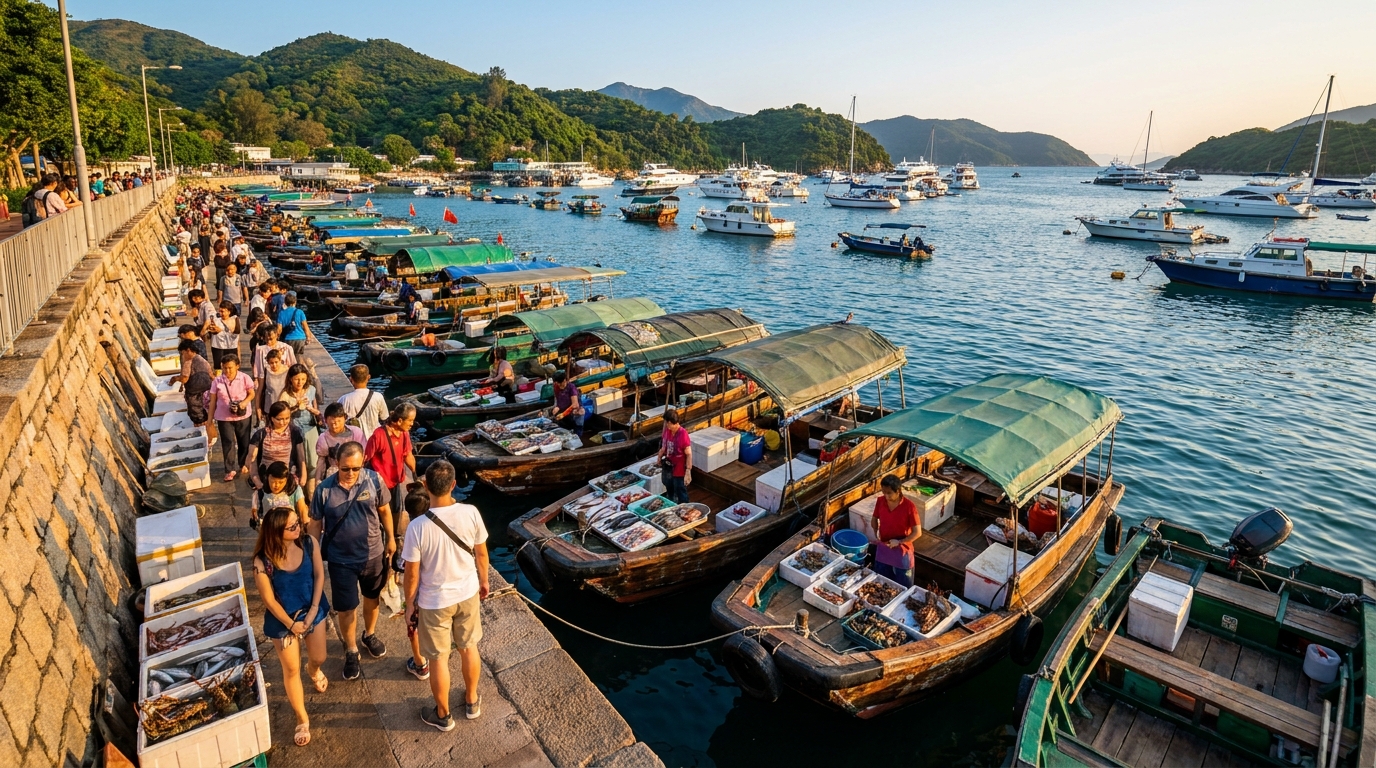
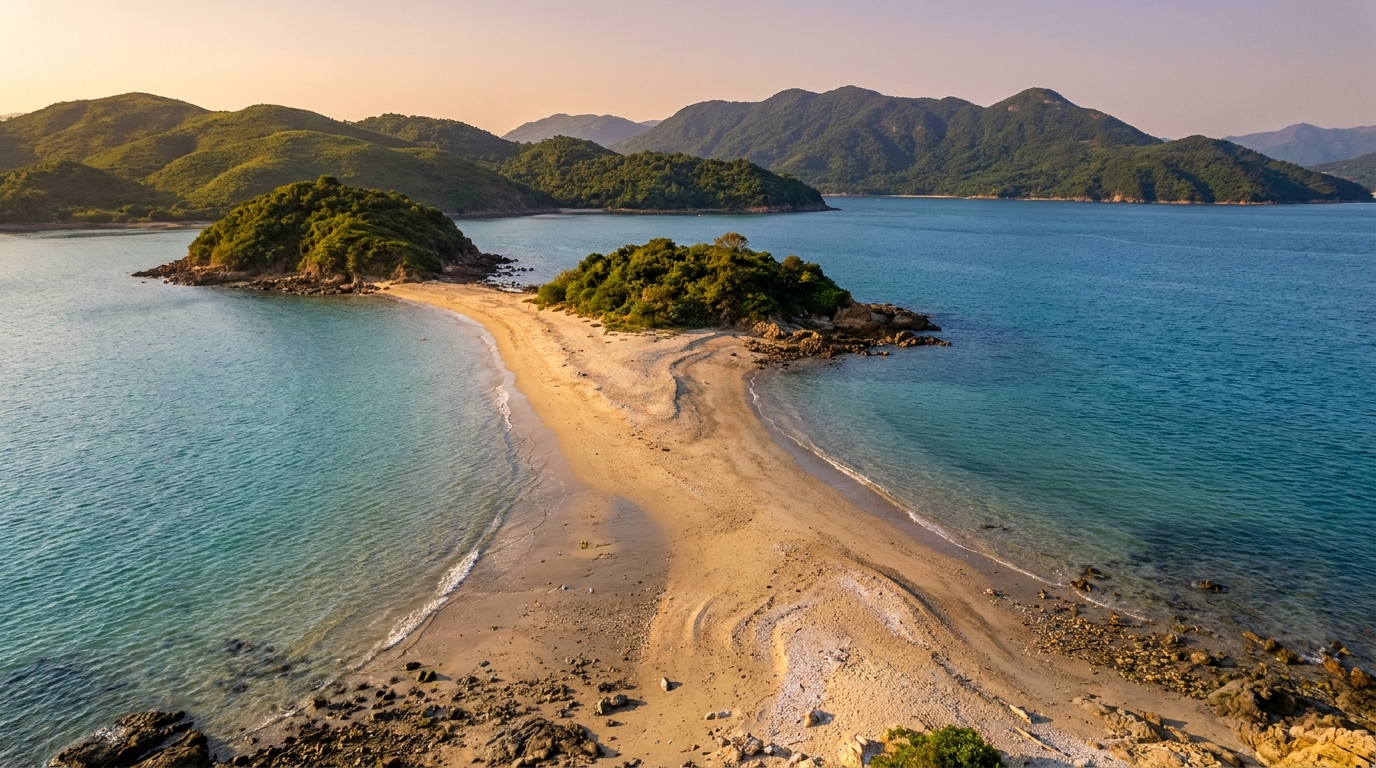
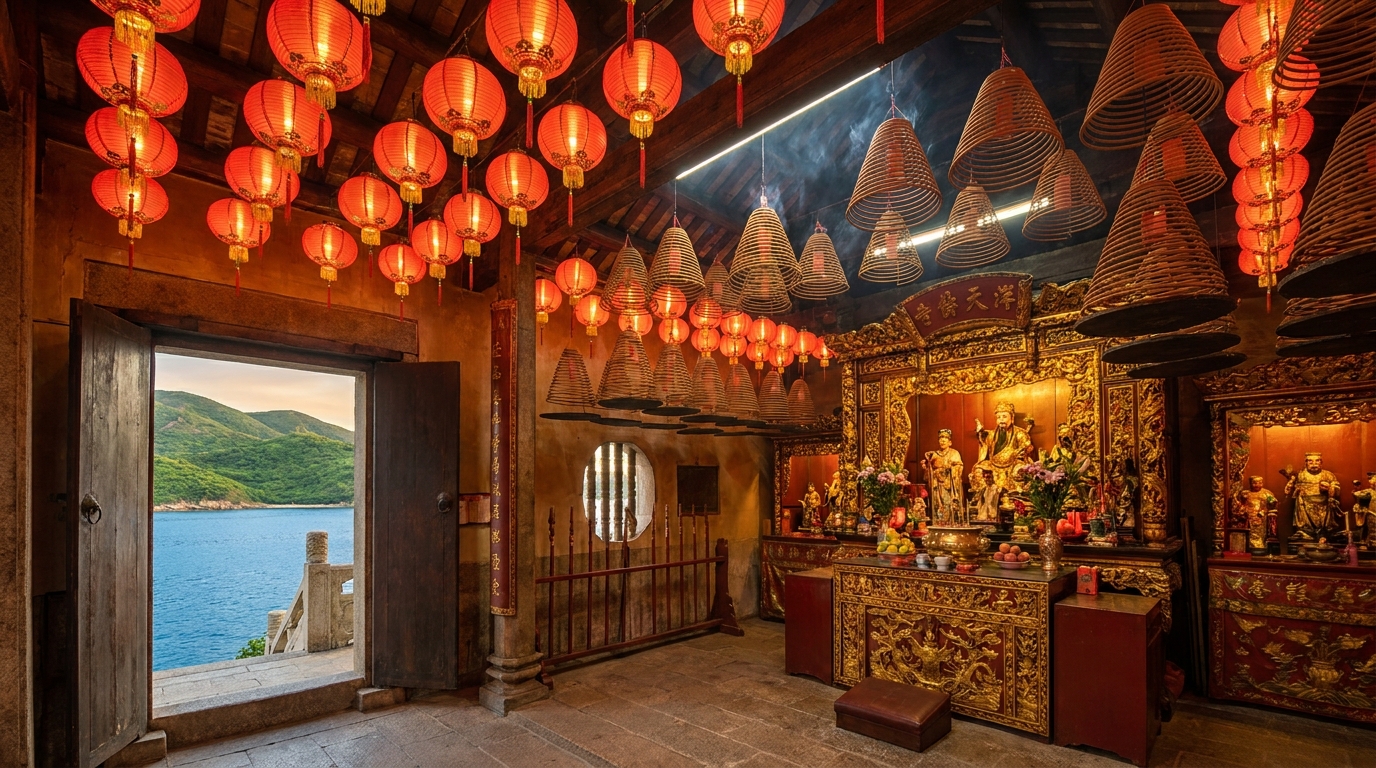
Yim Tin Tsai pairs naturally with other short hops from the Sai Kung waterfront. Combine it with the Sharp Island tombolo, where you can walk across a natural sandbar at low tide, or fold both into a wider day exploring the Hong Kong UNESCO Global Geopark. Back on shore, round things off with a seafood lunch in Sai Kung Town or a visit to the waterfront Tin Hau Temple — a fitting counterpoint to the island’s Catholic chapel, and a reminder of how many faiths and communities have shaped this corner of Hong Kong.
Frequently asked questions
How do I get to Yim Tin Tsai?
Kaito ferries run from the Sai Kung public pier, especially at weekends and on public holidays; the crossing takes about 15 minutes. Pay cash and check the return-boat times posted at the pier before you set off.
What does 'Yim Tin Tsai' mean?
The name means ‘little salt field’. The island’s Hakka community produced salt by evaporating seawater in shallow pans for some 300 years before the village was abandoned in the late 20th century.
Why did the chapel win a UNESCO award?
St Joseph’s Chapel received a UNESCO Asia-Pacific Award for Cultural Heritage Conservation in recognition of the careful, community-led restoration of the historic Catholic church and its village.