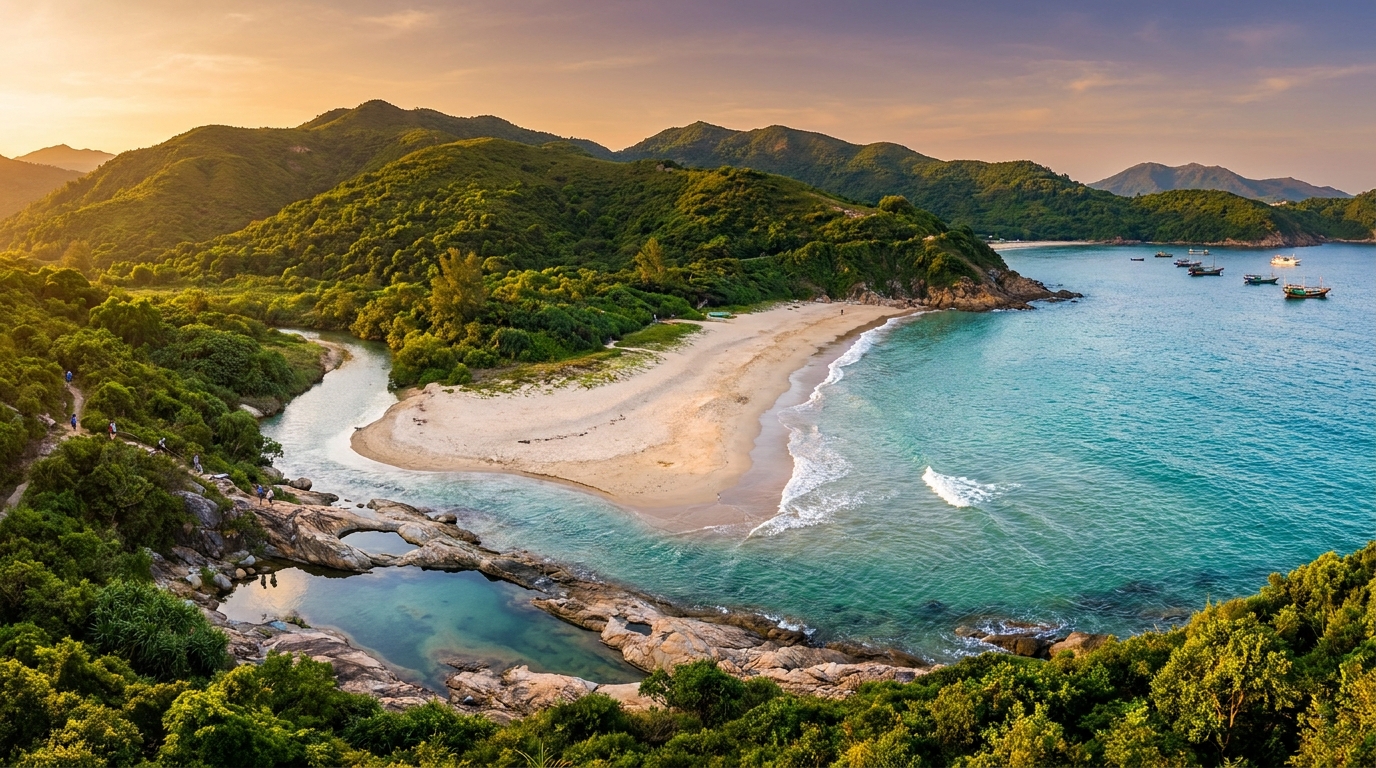
Ask Hong Kongers to name the territory’s most beautiful beach and a great many will say Tai Long Wan — literally “Big Wave Bay”. This remote arc of golden sand on Sai Kung’s exposed eastern coast is gloriously hard to reach, and that, more than anything, is why it stays so unspoilt. There are no roads, no resorts and no crowds — just open ocean, green hills and surf rolling in from the South China Sea.
Why it earns the title “most beautiful”
In a city of seven million people, true wilderness is rare and precious. Tai Long Wan is the closest most Hong Kongers will come to it. The combination is hard to beat: pale-gold sand, clear turquoise water, a backdrop of steep green ridges, and the dramatic cone of Sharp Peak presiding over the northern end. Because the bay faces the open sea, it catches genuine swell — the surf here is the real thing, drawing the rare Hong Kong surfer. The lack of any road means there are no buildings of scale, no neon and no traffic noise; on a quiet weekday you can have an entire bay almost to yourself. It is the sort of place that makes you forget you are minutes, as the crow flies, from a global metropolis.
A string of beaches
Tai Long Wan isn’t a single beach but a series of linked bays backed by hills, strung along a few kilometres of coast:
Sai Wan
The southernmost and most accessible of the four, reached by a roughly 90-minute walk from Sai Wan Pavilion. With its clean crescent of sand and the famous Sheung Luk Stream pools just inland, it’s the usual first taste of Tai Long Wan — see the dedicated Sai Wan guide.
Ham Tin
Often considered the heart of Tai Long Wan. Ham Tin has the best-known village stores, a quirky wooden footbridge across the stream, and a long, swimmable beach. It’s the most popular spot to camp, eat a bowl of noodles, or stage an overnight trip.
Tai Wan
The largest and wildest of the bays, a long open sweep of sand with the fewest facilities. It’s the quietest place to walk and the most exposed to surf — beautiful, but the most demanding for swimmers.
Tung Wan
The remote northern bay below Sharp Peak — least visited, hardest to reach, and for many the most pristine of all. Visiting it usually means a serious hike or a boat drop-off.
How to get there
There is no road to Tai Long Wan. Your options:
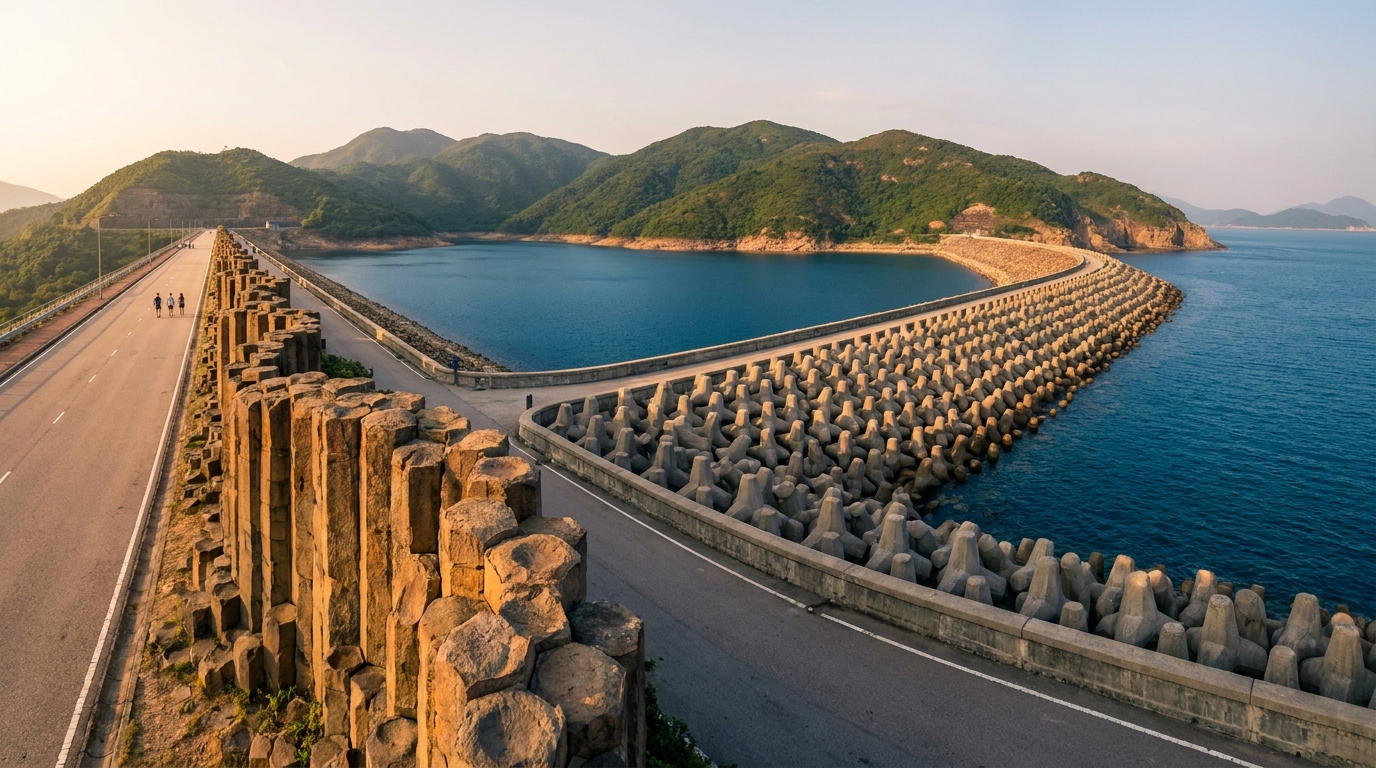
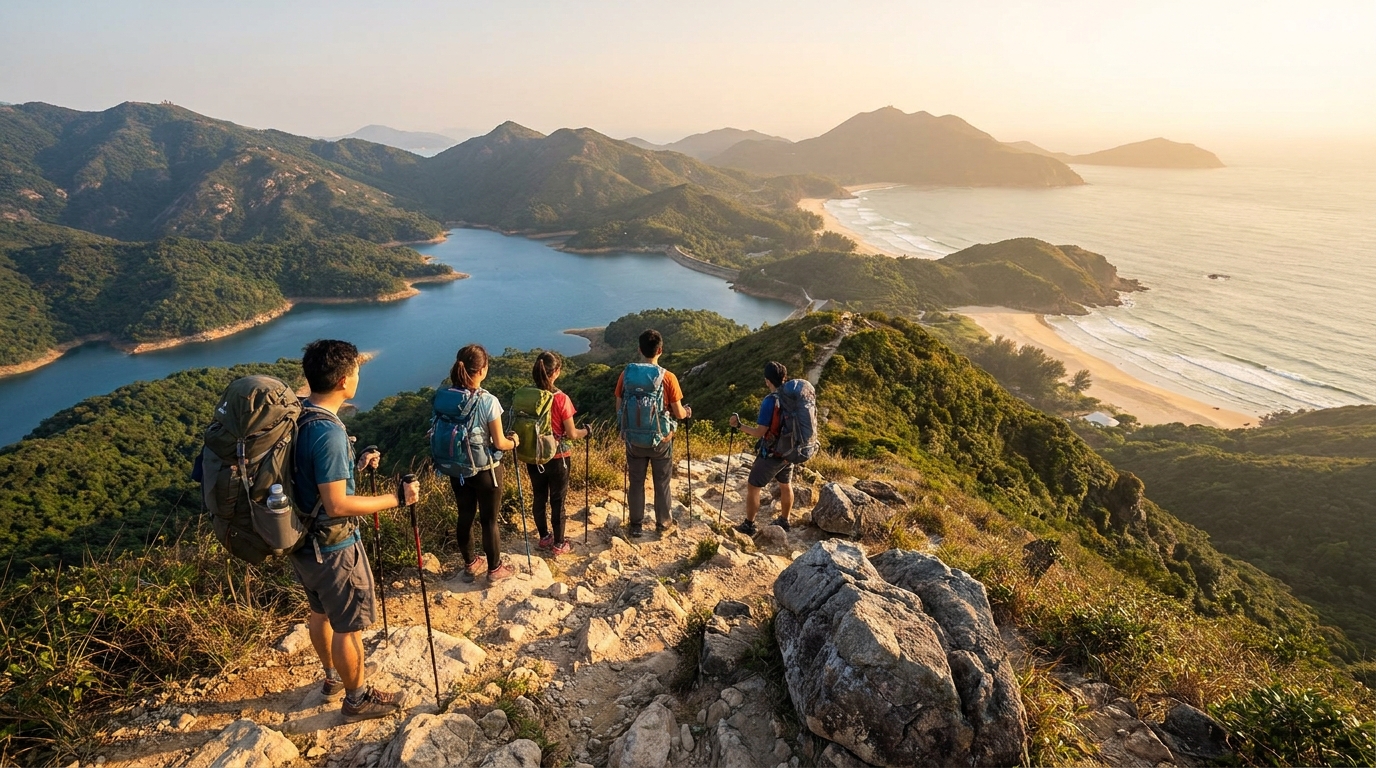
- Hike via the MacLehose Trail — the classic approach, descending from the hills of Section 2 after starting at the East Dam; or the shorter route in from Sai Wan Pavilion on Sai Wan Road via Sai Wan, about 90 minutes on foot.
- By boat — speedboats and licensed kaito ferries run from the public pier at Sai Kung Town, especially at weekends. This saves the long walk and is ideal if you mainly want beach time. Pay cash, agree the price first, and confirm the last return boat.
Either way, allow a full day, and check the transport guide to reach Sai Kung first — remember there is no MTR station in Sai Kung, so you’ll arrive in the town by bus or minibus before continuing.
| Route in | How | Time | Best for |
|---|---|---|---|
| Sai Wan Pavilion → Sai Wan | Walk | ~90 min | Day-trippers, families with older kids |
| East Dam → over the hills | MacLehose Sec. 2 | 4–6 hrs | Serious hikers |
| Sai Kung pier → beach | Speedboat / kaito | ~30 min | Beach time, tired legs |
Swim with great caution
This is the single most important thing to understand about Tai Long Wan: these are unpatrolled beaches with no lifeguards, genuine surf and strong rip currents. They are not the place for weak swimmers or young children to go in deep. The waves that make the bay beautiful also make it dangerous, and a rip can pull a confident adult out to sea in seconds. Every year, inexperienced visitors get into serious trouble here.
If you do swim, follow these rules:
- Stay close to shore and within your depth — do not strike out into the surf.
- Never swim alone, and keep children right beside you at all times.
- If caught in a rip, don’t fight it — stay calm, float, and swim parallel to the beach until you’re free of the current, then angle back in.
- Get out before you’re tired. The walk or boat is your only way back, and there is no rescue service.
Camping and staying over
Tai Long Wan is a favourite for camping, especially at Ham Tin and Sai Wan, where village stores rent simple sites and sell cold drinks, beer and basic meals. Watching the sunrise over the surf, or the stars on a clear night far from city light, is unforgettable — see the wider camping guide for what to bring. Facilities are minimal, so come fully self-sufficient and, above all, take every scrap of litter home.
What to bring
Carry plenty of water (at least two litres in summer), sun protection, food, sturdy footwear and a rubbish bag. The small village stores at Ham Tin and Sai Wan sell drinks and simple noodles in season, and a few offer a cold beer or basic camping, but service is limited and hours are irregular — never plan your day around them. Phone signal is patchy, so tell someone your plan and don’t rely on data. Avoid visiting in rainstorm or typhoon weather, when the streams flood, the boats stop and the surf turns lethal.
Tai Long Wan rewards the effort like nowhere else in Hong Kong. Combine it with the East Dam geology at the start of the MacLehose, finish with a Sai Kung Town seafood dinner, and you’ll understand exactly why this bay tops so many “most beautiful” lists.
Frequently asked questions
How do you get to Tai Long Wan?
There is no road. Hike in via the MacLehose Trail (from the East Dam or from Sai Wan Pavilion at Sai Wan Road), or take a speedboat/kaito from Sai Kung Town. Allow a full day.
Is it safe to swim at Tai Long Wan?
The beaches are beautiful but unpatrolled, with strong surf and rip currents and no lifeguards. Swim with great caution, never alone, and stay close to shore.
Are there shops or toilets?
Ham Tin and Sai Wan have small seasonal village stores selling drinks and simple food, and basic facilities, but don’t rely on them — carry your own water.