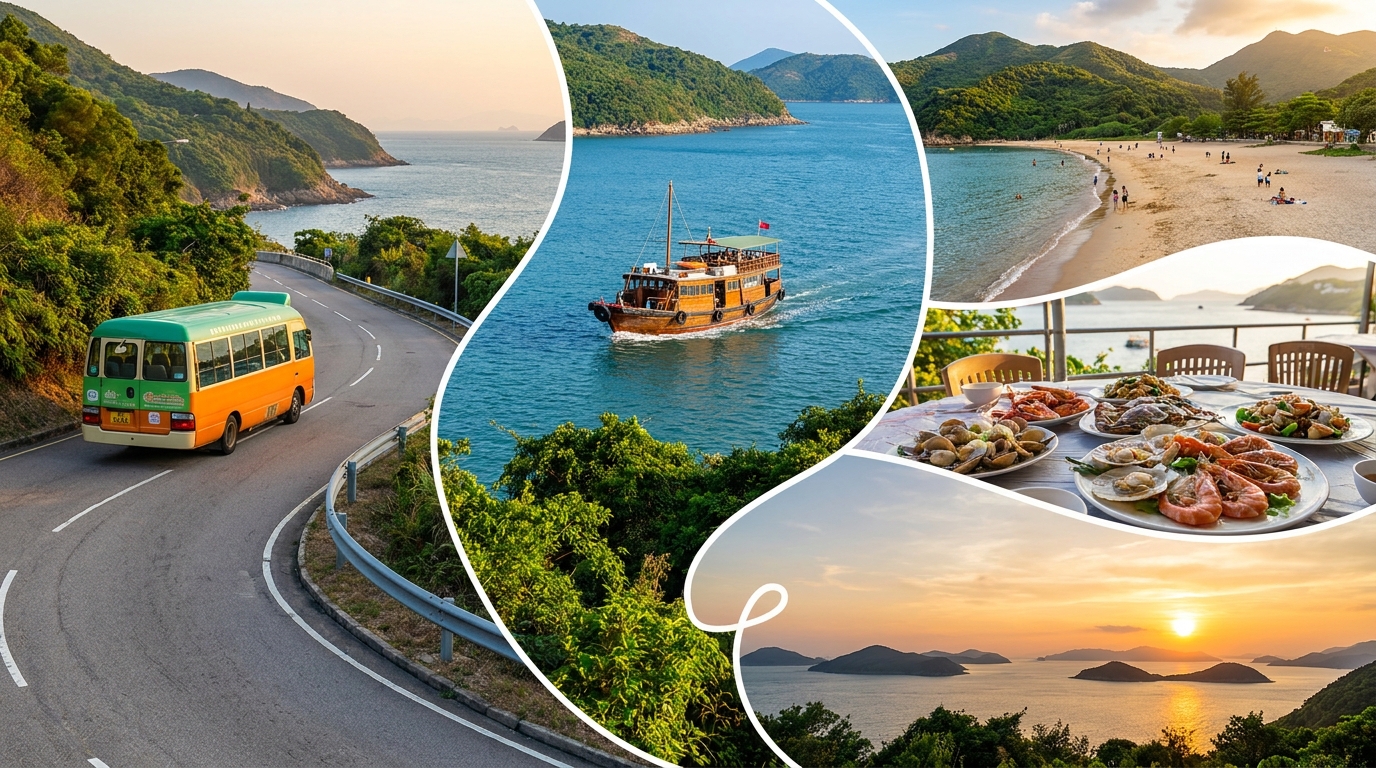
If there is one thing you must do in Sai Kung Town, it is eat seafood by the water. The waterfront’s floating market — sampans selling the day’s catch straight off the boat, their decks lined with tubs that bubble and splash — is one of Hong Kong’s classic, living experiences. It can also feel a little intimidating the first time: prices are by weight, the action is quick, and a lot happens in Cantonese. This guide demystifies the whole ritual, from choosing a fish on a sampan to clearing your plate of garlic-fried crab.
How the Sai Kung seafood scene works
There are really two ways to eat seafood here, and it helps to understand both before you arrive.
- The market route (the experience): you buy live seafood from the sampans along the waterfront, carry it to a restaurant, and pay that restaurant a cooking fee to prepare it however you like. You control exactly what you eat and how much you spend on the raw catch.
- The restaurant route (the easy way): you walk into a harbourside restaurant, point at the live tanks out front, and let them weigh, price and cook in one transaction. No haggling, one bill.
Neither is “more authentic” than the other — locals do both depending on mood. First-timers often enjoy doing the market once for the theatre of it, then defaulting to restaurant tanks thereafter.
Buying from the sampan floating market
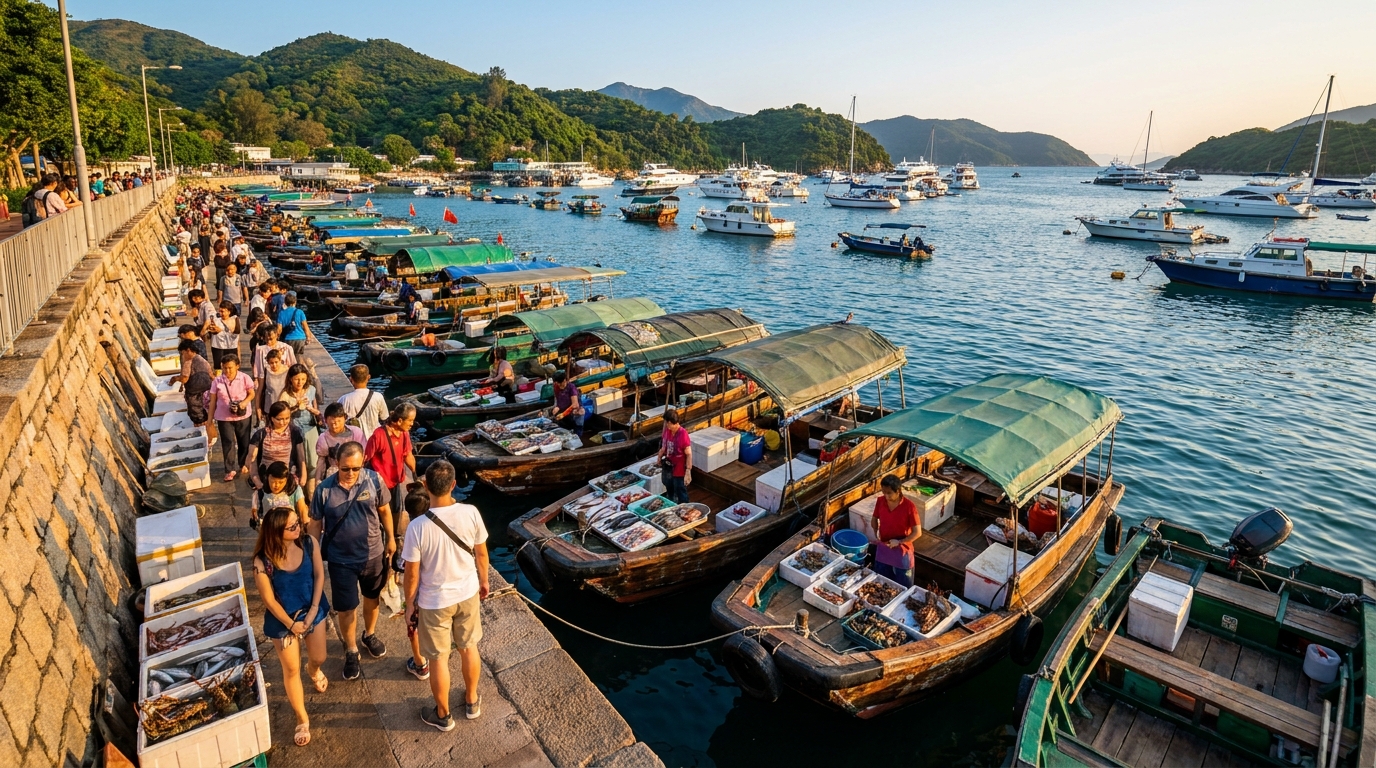
Walk the promenade beside the public pier, where you also catch the kaito ferries to the islands. Fishermen and traders moor their sampans against the seawall, decks lined with tubs of live fish, prawns, mantis shrimp, crabs, clams, scallops and razor clams. The rhythm is simple:
- Point at what you want. The seller nets it so you can see it is alive and lively — a sluggish fish or a limp prawn is not worth buying.
- Agree the price before anything is weighed. Prices are quoted per catty (一斤, about 600g). Ask “how much per catty?” and settle it clearly. This is the single most important habit: confirm the rate first, then let them weigh.
- Watch the weighing. They will scoop your choice into a bag or basket and weigh it on a hanging or digital scale. Pay the agreed rate for the actual weight.
- Pay cash. The sampans deal in cash; have notes ready.
A few species sense-checks help you choose well. Garoupa (grouper) and snapper are classic steaming fish. Prawns and mantis shrimp should be flicking and snapping. Crabs should feel heavy for their size and wave their claws. Clams and scallops should be tightly shut or close when tapped — discard any that gape open.
Getting your catch cooked
Once you have your bag of seafood, carry it to one of the many harbourside restaurants and tell them you have your own catch to cook. They will charge a cooking fee, generally per dish or by weight, and prepare it to order. Before you hand anything over:
- Confirm the cooking fee and how it is calculated.
- Choose the cooking method for each item — steamed, stir-fried, deep-fried, with garlic, with black bean, and so on (see the dishes below).
- Order your sides — rice, greens, a soup — from the restaurant’s own menu while you are there.
This split — your seafood, their kitchen, their drinks and sides — is the heart of the Sai Kung ritual, and once you have done it once it feels completely natural.
What to order: the classic dishes
Freshness is the star, so the best preparations are the ones that show it off rather than bury it.
- Steamed whole fish with ginger and spring onion, finished with hot oil and a splash of soy. The purest test of a fish’s freshness, and the dish to order if you buy just one thing.
- Garlic steamed prawns or razor clams, blanketed in fried minced garlic and glass noodles — sweet, fragrant and a crowd favourite.
- Stir-fried clams with black bean and chilli (豉椒炒蜆) — punchy, savoury and great with rice or beer.
- Typhoon-shelter crab (避風塘炒蟹), wok-tossed with a mountain of crispy fried garlic, chilli and fermented black bean — the loud, addictive showpiece of any Sai Kung table.
- Salt-and-pepper mantis shrimp (椒鹽瀨尿蝦), fried crisp in the shell.
- Steamed scallops on the half-shell with garlic and vermicelli.
A simple ordering rule for a small group: one whole steamed fish, one garlic-prawn or scallop dish, one crab, one stir-fried clam, plus rice and a vegetable. That covers steaming, frying and stir-frying and leaves nobody hungry.
At a glance
| Step | What to do | Key tip |
|---|---|---|
| 1. Browse | Walk the sampans and restaurant tanks | Buy the liveliest specimens only |
| 2. Price | Ask the rate per catty before weighing | Confirm first, weigh second |
| 3. Pay | Settle with the sampan in cash | Have notes ready |
| 4. Cook | Take it to a restaurant; agree the cooking fee | Confirm fee and cooking method up front |
| 5. Round it out | Order rice, greens, soup, drinks | Use the restaurant’s menu for sides |
Choosing a restaurant and minding your manners
Pick a restaurant the easy way: look for busy tables, a turnover of live tanks out front, and a posted cooking-fee policy. A full room of locals at meal time is the most reliable sign. If you would rather not buy from the sampans at all, simply order from the restaurant’s own tanks — the catch is just as fresh, and the price-and-cook happen in one go.
A little etiquette goes a long way:
- Be decisive and friendly at the sampans — the sellers are quick and good-humoured, and a clear “how much per catty?” gets you a straight answer.
- Don’t poke or stress the animals beyond a glance to check they are lively.
- Carry cash. The floating market and many smaller restaurants prefer it, and it keeps the sampan transaction smooth.
- Eat slightly early or late. The harbourside fills up fast at peak meal times, especially on autumn and spring weekends.
Pairing seafood with a day out
A seafood feast is the perfect reward for a day on the water or the trail. Build your day so you arrive at the harbour hungry: take a morning kaito ferry to Yim Tin Tsai or Sharp Island, or hike out to the High Island Reservoir East Dam, then circle back to the waterfront for a late lunch or early dinner. For a full plan that builds the meal into a complete day, follow our one-day Sai Kung itinerary.
Timing also matters for the harbour’s mood: autumn and spring are the liveliest seasons for the floating market, while quiet winter weekdays are calmest — see our guide to the best time to visit. However you plan it, start with getting to Sai Kung so you arrive in time for the catch of the day.
Frequently asked questions
Can I buy seafood directly from the boats in Sai Kung?
Yes. Sampans moored along the waterfront in Sai Kung Town sell live fish, prawns, crabs and shellfish. You buy directly, then take your catch to a nearby restaurant, which will cook it for a fee.
How much does it cost to have seafood cooked?
Restaurants charge a cooking fee, usually per dish or by weight. Always confirm the fee and the cooking method before you hand over your seafood, and bring cash, as the sampans and smaller restaurants prefer it.
Do I need to buy from a sampan to eat seafood in Sai Kung?
No. You can skip the market entirely and order straight from a restaurant’s own tanks — the seafood is just as fresh. The sampan market is the experience; the restaurant tanks are the easy option.