Most visitors to Sai Kung never set foot on Kau Sai Chau, and that is rather the point. This green, low-lying island just off the Sai Kung coast is quiet, uncrowded and reached by its own dedicated ferry — a place that swaps the bustle of the waterfront for fairways, sea breezes and a surprisingly deep slice of local history.
An island with two stories
Kau Sai Chau tells two very different stories at once. On its hills and coastline sits Hong Kong’s only public golf course, a modern facility that draws players from across the territory. Yet around the island’s southern shore lies an older Kau Sai Chau: a former fishing village, a temple to a sea-god that has stood for centuries, and a rock carving older than written records in this region. The two coexist on the same patch of land, and a thoughtful visit takes in both.
The public golf course
The island’s main draw — and the reason it has its own ferry — is the public golf course. Operated as a not-for-profit facility, it was created to open up a sport that in Hong Kong has often been the preserve of private clubs. The course spreads multiple 18-hole layouts across the island’s rolling terrain, with holes that climb low hills and run alongside the sea, giving players wide views over the surrounding waters and islands.
Because it is a public course, it is accessible to ordinary golfers rather than members only, and it has long been one of the busiest and best-regarded golf venues in Hong Kong. Practically everything a visiting golfer needs is on the island, from the clubhouse to practice facilities, so most people arrive, play and leave by the dedicated ferry without needing anything else.
A few practical points for golfers:
- Booking ahead is essential — tee times are popular, especially at weekends.
- The dedicated ferry runs between the Sai Kung public pier and the course’s own terminal on the island.
- Check current sailing times, fees and dress requirements with the course before you travel, as these are set by the operator.
Hung Shing Temple — a declared monument
Away from the fairways, on the site of the island’s old fishing community, stands the Hung Shing Temple. Hung Shing is a deity venerated by fishing communities along the South China coast as a protector of seafarers, and the temple reflects Kau Sai Chau’s long history as a base for boat-dwelling families. The temple is a declared monument, giving it the highest level of statutory heritage protection in Hong Kong, and it has been carefully conserved.
Modest in scale but rich in atmosphere, the temple is a reminder that long before golf came to the island, Kau Sai Chau was a working maritime settlement whose people looked to the sea for both livelihood and protection. The fishing families who once anchored here were part of the same coastal culture you’ll find honoured all along the Sai Kung shore, where temples to sea-deities marked every harbour and gave structure to the year through festivals and processions. Seen in that light, the temple is not a stray curiosity beside a modern course but a surviving thread of a much older Sai Kung — the maritime, boat-dwelling world that shaped these islands long before they became weekend escapes.
The rock carving nearby
Close to the temple, on the rocky shoreline, is a prehistoric rock carving — one of a small number of ancient carvings found around Hong Kong’s coast. Their precise age and meaning remain uncertain, but they are generally thought to date back thousands of years and are associated with early coastal peoples. The carving’s exposed shoreline setting makes it both evocative and fragile, so visitors should look without touching.
Quiet scenery
Beyond its named sights, Kau Sai Chau simply offers calm. The combination of manicured course, scrubby hillsides and a long, indented coastline means wide skies, sea views in almost every direction and far fewer people than you’ll meet on Sai Kung’s busier islands. For golfers it is the playing experience; for the occasional non-golfing visitor reaching the heritage areas, it is the sense of having a corner of Sai Kung almost to yourself.
The island’s relative emptiness is part of its character. Where Sai Kung’s other islands fill with day-trippers, Kau Sai Chau’s access is shaped by the golf ferry, so foot traffic stays light and the landscape keeps its hush. Coastal birds work the shoreline, the grass moves with the breeze, and the only soundtrack is wind and water. It is the kind of place that rewards visitors who slow down and let the quiet settle in.
How to visit
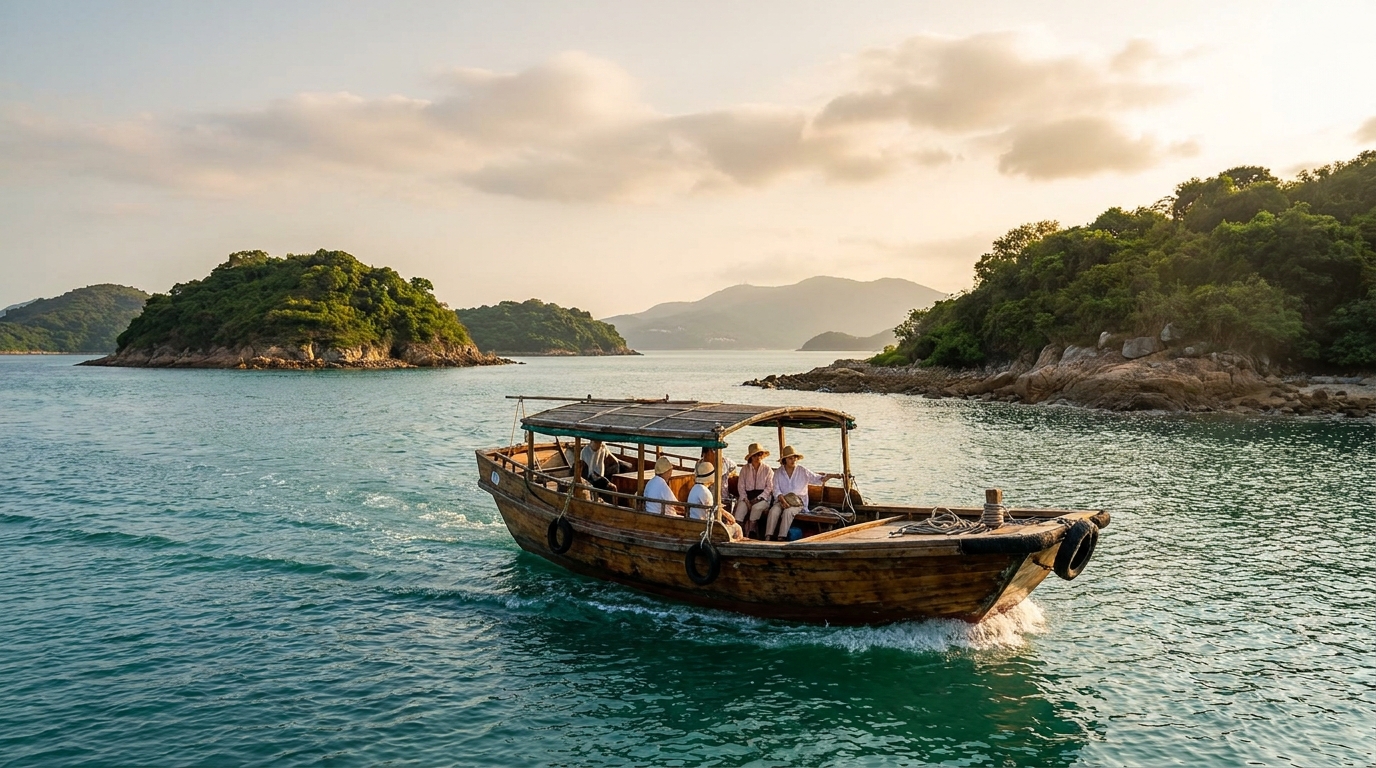
Access to Kau Sai Chau is via a dedicated ferry from the Sai Kung public pier to the golf course’s own terminal — the crossing is short, across the sheltered water inside the bay. The service is operated principally for the golf course, so sailing times and arrangements are set by the operator; check current details before you plan your day.
| At a glance | Detail |
|---|---|
| Main draw | Hong Kong’s only public golf course |
| Access | Dedicated ferry from Sai Kung public pier |
| Heritage | Hung Shing Temple (declared monument) + rock carving |
| Best for | Golfers; heritage-minded day visitors |
| Booking | Essential for golf, especially weekends |
To reach the Sai Kung public pier in the first place, see our guide to getting around Sai Kung, and for connections from the city, the getting to Sai Kung guide — remember there is no MTR station in Sai Kung, so you’ll arrive by bus or minibus before walking to the waterfront.
Practical tips
- Plan around the ferry. Because sailings serve the course, build your day around its timetable and confirm the last return boat.
- Golfers: book early and check dress and equipment requirements with the operator.
- Bring sun protection and water — the island is open and exposed, with limited shade.
- Treat the temple and rock carving with respect: they are protected heritage. Don’t touch the carving or disturb the temple.
- Carry out your rubbish; facilities outside the course are minimal.
Nearby and beyond
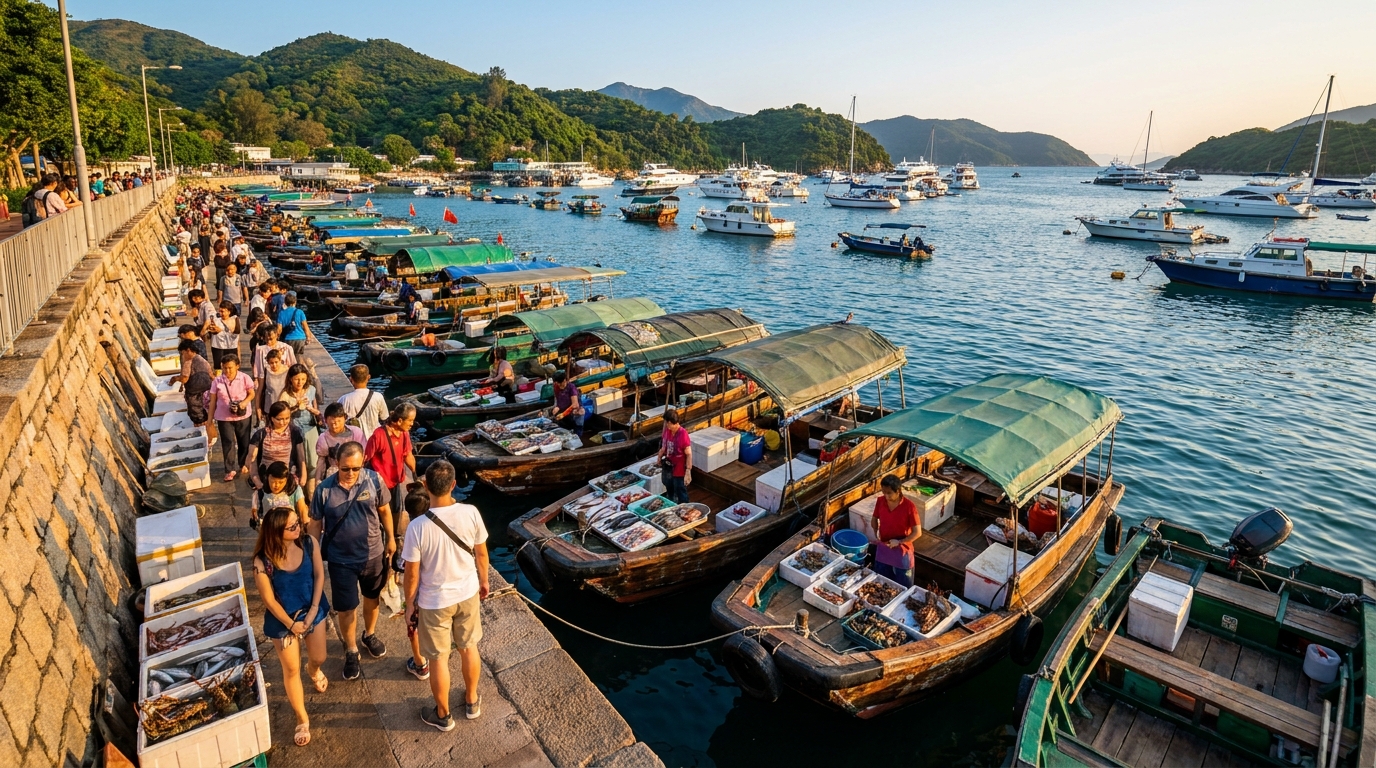
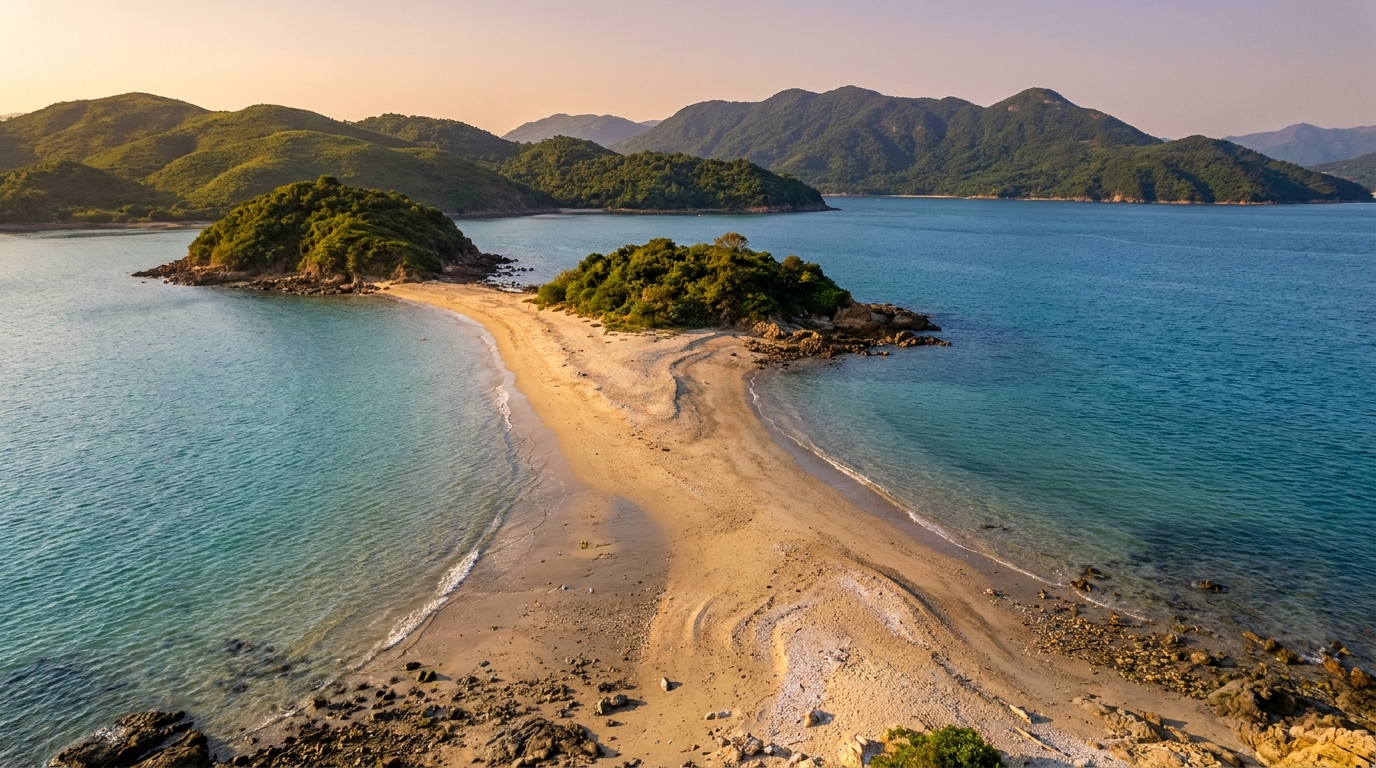
Kau Sai Chau pairs naturally with the rest of the Sai Kung waterfront. After a round of golf or a heritage visit, head back to Sai Kung Town for a seafood lunch along the promenade. If you have more time on the water, the nearby Sharp Island offers a walk-across tombolo sandbar and an easy nature trail — an easy add-on by a separate kaito ferry from the same pier.
Frequently asked questions
How do I get to Kau Sai Chau?
A dedicated ferry runs from the Sai Kung public pier to the golf course’s own terminal; the crossing is short. The service is operated for golfers and course visitors, so check current sailing times before you travel.
Is there a golf course on Kau Sai Chau?
Yes — Kau Sai Chau is home to Hong Kong’s only public golf course, with multiple 18-hole layouts set across the island’s hills and coast. It is the island’s main attraction. See our getting around guide for how to reach the Sai Kung pier.
What is the Hung Shing Temple on Kau Sai Chau?
It is a historic temple to the sea-god Hung Shing on the island’s old fishing settlement and a declared monument, with a prehistoric rock carving nearby on the shoreline.