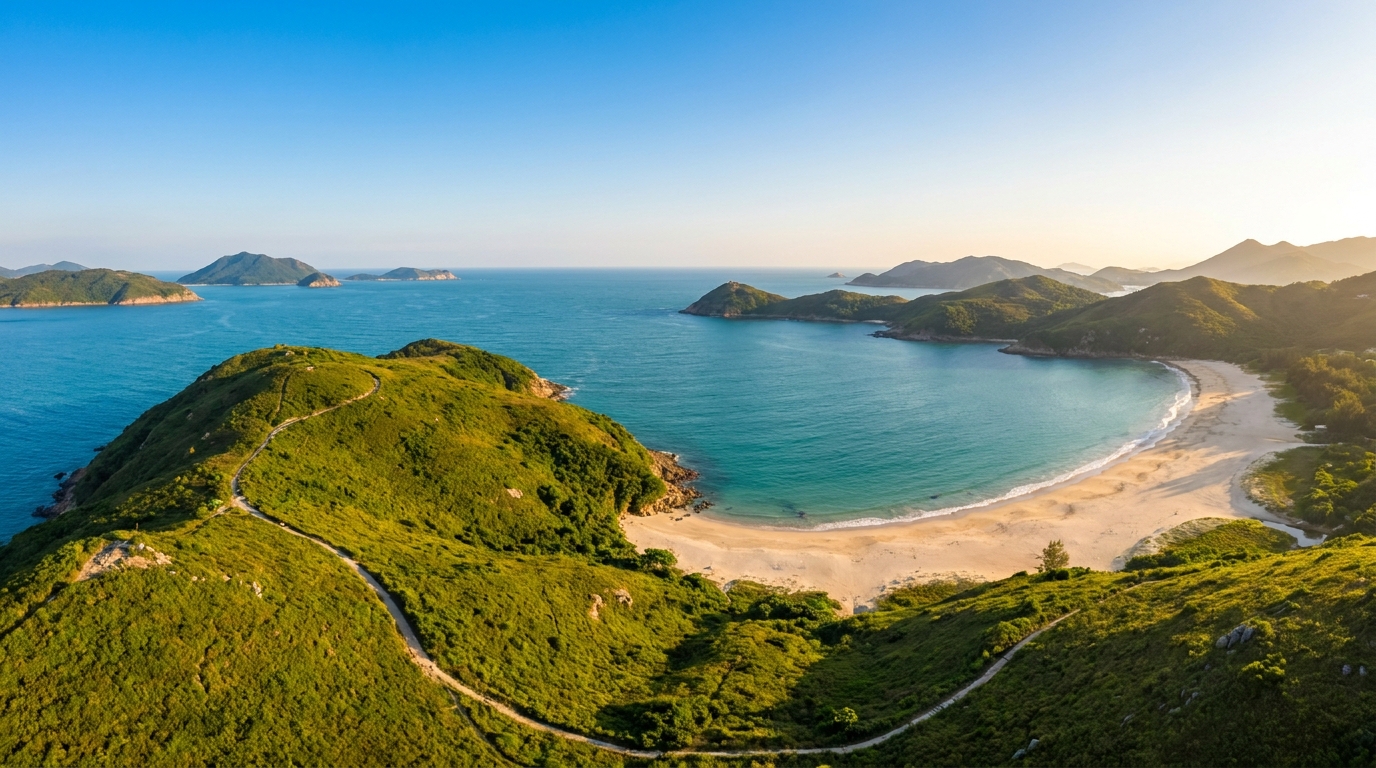
Tucked at the end of a quiet side road off Clear Water Bay Road, Po Toi O (布袋澳) is one of those rare corners of Hong Kong that feels untouched by the decades — a tiny, horseshoe-shaped cove where fishing boats still bob, nets still dry on the railings and the smell of the sea and the wok drifts across the water. Just a short detour from the busy Clear Water Bay beaches, it offers a genuine, lived-in glimpse of old fishing life.
A village that time forgot
Po Toi O is a small, traditional fishing village wrapped around a sheltered inlet on the eastern side of the Clear Water Bay peninsula. Its Chinese name translates roughly as “cloth-bag bay,” a nod to the way the surrounding hills enclose the water in a snug, bag-like pouch — a natural anchorage that has protected boats here for generations.
For centuries this was a working community of fisherfolk, many of them living afloat or in stilt houses (棚屋) built out over the water on timber and concrete legs. Today the population is small and quieter, but the village has kept its character: weathered tin-roofed homes, narrow concrete lanes, drying squid and salted fish, small shrines and the constant gentle clutter of a place that earns its living from the sea. There is no grand sight to tick off here — the appeal is the atmosphere, the slow pace and the sense of stepping into a Hong Kong that has all but vanished elsewhere.
What to see
Po Toi O is best enjoyed slowly, on foot. It is tiny enough to wander in under an hour, but rewarding for anyone who likes to linger, photograph and watch everyday village life.
The fish rafts and the cove
The heart of the village is its fish rafts (魚排) — floating timber platforms moored across the inlet, where live fish, grouper and shellfish are raised in netted pens beneath your feet. These rafts supply the village restaurants directly, which is why the seafood here is about as fresh as it gets. From the waterfront you can watch sampans and small fishing boats coming and going, and see the catch being handled. The enclosed cove is calm and photogenic, ringed by the green hills of the Clear Water Bay Country Park.
The Tin Hau temple
On the slope above the village stands a small Tin Hau temple, dedicated to the goddess of the sea and protector of fisherfolk — a fixture in almost every Hong Kong fishing community. It is a modest, well-tended shrine, and during the annual Tin Hau festival the village comes alive with celebration. For the wider story of these waterfront temples across the district, see our guide to the Tin Hau temples of Sai Kung.
Stilt houses and village lanes
Wandering the lanes, you will pass classic stilt houses perched over the water, fishing gear hung out to dry, and small altars tucked beside doorways. It is a living village, so visit respectfully — keep to the public paths, ask before photographing people, and remember that these are homes, not exhibits.
Famous old-school seafood
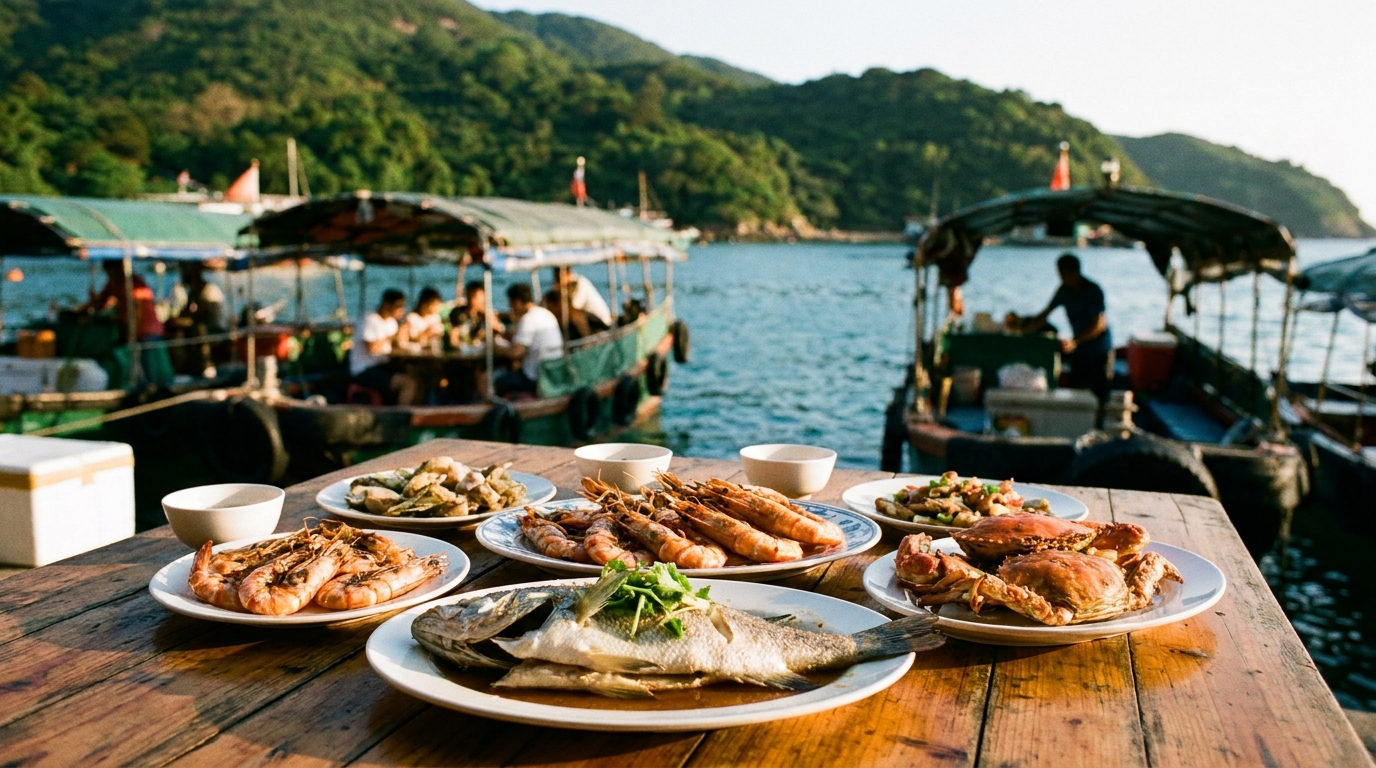
Po Toi O’s biggest draw for many visitors is its seafood restaurants. A handful of long-running, family-run establishments sit right on the waterfront, serving the day’s catch straight from the rafts — steamed fish, salt-and-pepper prawns, stir-fried clams, squid and the rest of the Cantonese seafood canon. The setting is the point: plastic chairs by the water, boats nodding alongside and the unhurried, old-school service that has all but disappeared from the city.
It makes a fine, lower-key alternative to the famous restaurant strip in Sai Kung Town. For tips on ordering, choosing fresh fish and getting a fair price, our Sai Kung seafood guide applies just as well here. As with any seafood meal in the region, confirm prices (often charged by weight) before the kitchen starts cooking.
A favourite film location
Thanks to its photogenic, time-warped scenery, Po Toi O has long been a popular film and television location. Its stilt houses, fish rafts and atmospheric lanes have appeared as backdrops in numerous Hong Kong productions, and you may well recognise the cove from the screen. That cinematic quality is part of why photographers and day-trippers keep finding their way down the side road.
How to get there
Po Toi O lies at the end of a short access road branching off Clear Water Bay Road, on the eastern flank of the peninsula near Tai Au Mun. There is no MTR station in Sai Kung or Clear Water Bay, so you arrive by road from Kowloon.
| From | Route | Notes |
|---|---|---|
| Diamond Hill (Exit C2) | KMB bus 91 toward Clear Water Bay | Alight near the Po Toi O turn-off |
| Choi Hung | Green minibus along Clear Water Bay Road | Connects city to the peninsula |
| Nearby | Taxi from Sai Kung / Tseung Kwan O | Easiest door-to-door option |
From the main road it is a short, signposted walk or drive down to the cove. Octopus card is accepted on buses and minibuses. For all the route options from the city, see our getting to Sai Kung guide. Note: do not confuse Po Toi O (this village) with Po Toi Island, a separate outlying island off southern Hong Kong Island.
Best time to visit
Po Toi O is pleasant year-round, but the cooler, drier months (October to March) are most comfortable for wandering and pairing the visit with a hike on the peninsula. Lunchtime and early afternoon are ideal if you are coming for seafood, when the restaurants are open and the rafts are busy. The annual Tin Hau festival is a colourful, atmospheric time to visit if your trip happens to coincide with it.
Practical tips
- Bring cash — small village restaurants may not take cards.
- Confirm seafood prices by weight before ordering.
- Visit respectfully — this is a living community; keep to public paths.
- Combine with a hike or the beaches rather than coming solely for the village, which is small.
- Wear comfortable shoes for the lanes and any onward walking.
Nearby and itinerary ideas
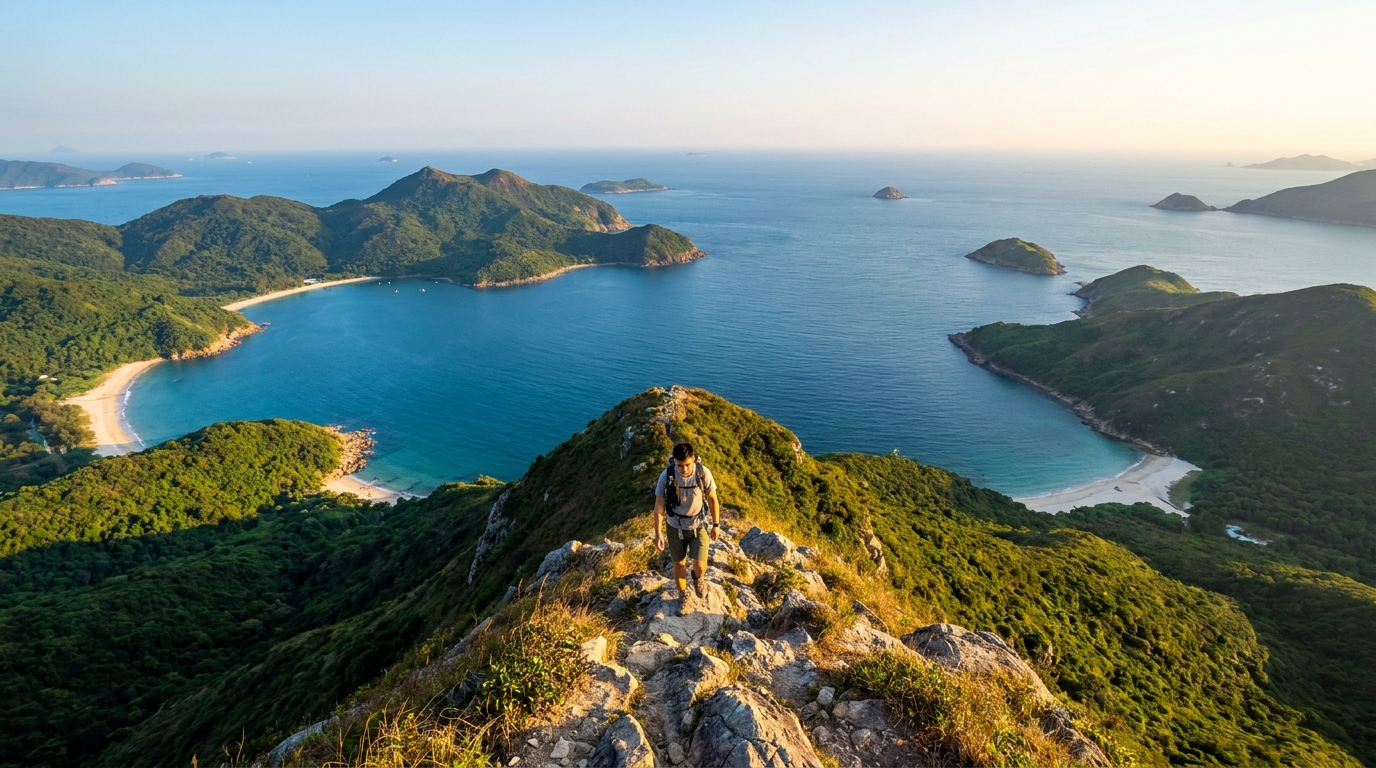
Po Toi O is best as one stop on a wider Clear Water Bay day. A classic plan pairs a morning swim or walk in the Clear Water Bay Country Park with a leisurely seafood lunch at Po Toi O. Strong walkers can tackle the High Junk Peak ridge nearby and descend to the village for a well-earned meal by the water. Either way, Po Toi O rewards the short detour with something increasingly rare in Hong Kong: a quiet, working fishing cove where old traditions still float gently on the tide.
Frequently asked questions
How do I get to Po Toi O?
Po Toi O sits at the end of a side road off Clear Water Bay Road. Take KMB bus 91 or a green minibus from Diamond Hill MTR toward Clear Water Bay, alight near the turn-off and walk down to the cove, or continue by taxi. See our getting to Sai Kung guide.
Is Po Toi O the same as Po Toi Island?
No. Po Toi O (布袋澳) is a mainland fishing village near Clear Water Bay in the Sai Kung district. Po Toi Island is a separate outlying island off the south of Hong Kong Island — easy to confuse by name only.
What is Po Toi O known for?
It is famous for its old-school seafood restaurants, its working fish rafts and stilt houses, a hillside Tin Hau temple, and its appearances as a film and TV location — a peaceful, traditional fishing scene close to the city.