Out on the far northern edge of the Sai Kung waters lies Tap Mun, known to most Hong Kongers simply as Grass Island — a remote, windswept escape of rolling green hills, big open skies, and cattle that wander wherever they please. It feels a world away from the city, and that is exactly why people make the journey.
A grassy island at the edge
Tap Mun sits where the sheltered Sai Kung waters meet the more open sea, and the wind off that water has shaped the island into the place it is. Trees struggle on its exposed flanks, but grass thrives, carpeting the hilltops in a soft green that turns golden in the dry season. The result is one of Hong Kong’s most distinctive landscapes: gentle, rounded hills sweeping down to a rugged coast, with nothing between you and the horizon but waving grass and the occasional grazing cow.
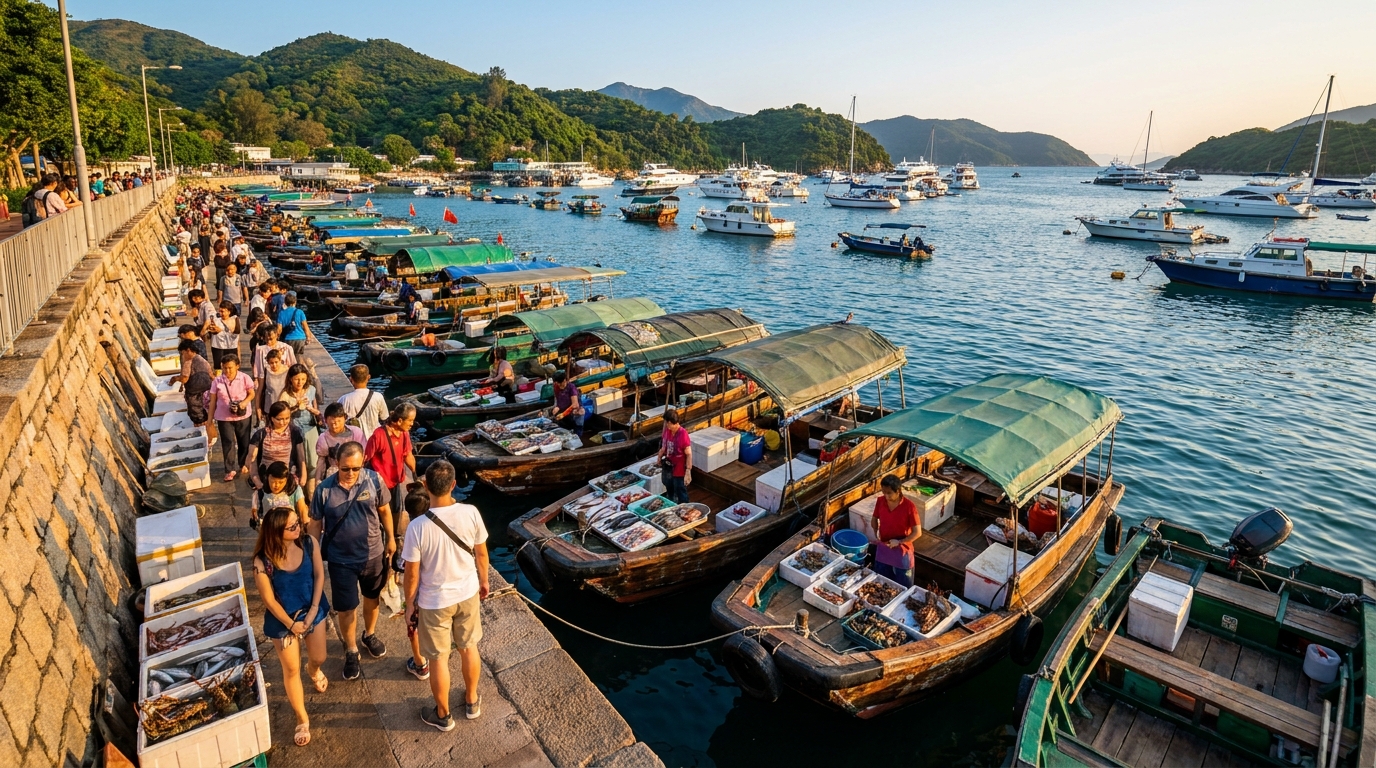
The island has a small, ageing fishing community on its sheltered western side, where a cluster of old houses, a few simple eateries and a working harbour give Tap Mun a lived-in heart. But most visitors are drawn to the open country beyond the village.
The free-roaming cattle
Tap Mun’s most beloved residents are its free-roaming cattle. These cows are descendants of farm animals left behind when traditional farming faded away; with no one to herd them, they simply stayed, breeding and grazing across the island’s grasslands ever since. Today they roam the hilltops freely, often lying contentedly in the grass with the sea behind them.
They are a wonderful sight, but they are wild animals, not pets:
- Keep a respectful distance and never get between a cow and its calf.
- Do not feed them — human food is bad for them and encourages them to approach people.
- Watch where you step and pitch your tent, and give the herd plenty of room.
What to see
The ‘flying cow’ clifftop views
The island’s most photographed scene is the sweep of grassland tumbling toward the sea, where cattle graze right up to the cliff edge against a backdrop of open water. From the right angle the cows seem to stand at the very brink of the land — the famous “flying cow” view that draws photographers and day-trippers alike. The clifftops also offer wide panoramas across the surrounding sea and distant islands.
The sea cave
Along Tap Mun’s wilder, wave-battered eastern shore, the sea has carved a notable sea cave into the rock. Reaching it involves picking your way over coastal rocks, so go carefully, wear proper shoes, and only approach in calm, safe conditions — the open coast here can be exposed to strong swell.
Tin Hau Temple
Beside the village stands a Tin Hau Temple, dedicated to the sea-goddess who protects fishing folk. Like the temples found across Sai Kung’s coastal communities, it reflects the island’s deep maritime roots and remains a focal point for the dwindling local population. You can read more about this tradition in our guide to the Tin Hau Temple of Sai Kung Town.
Camping and stargazing
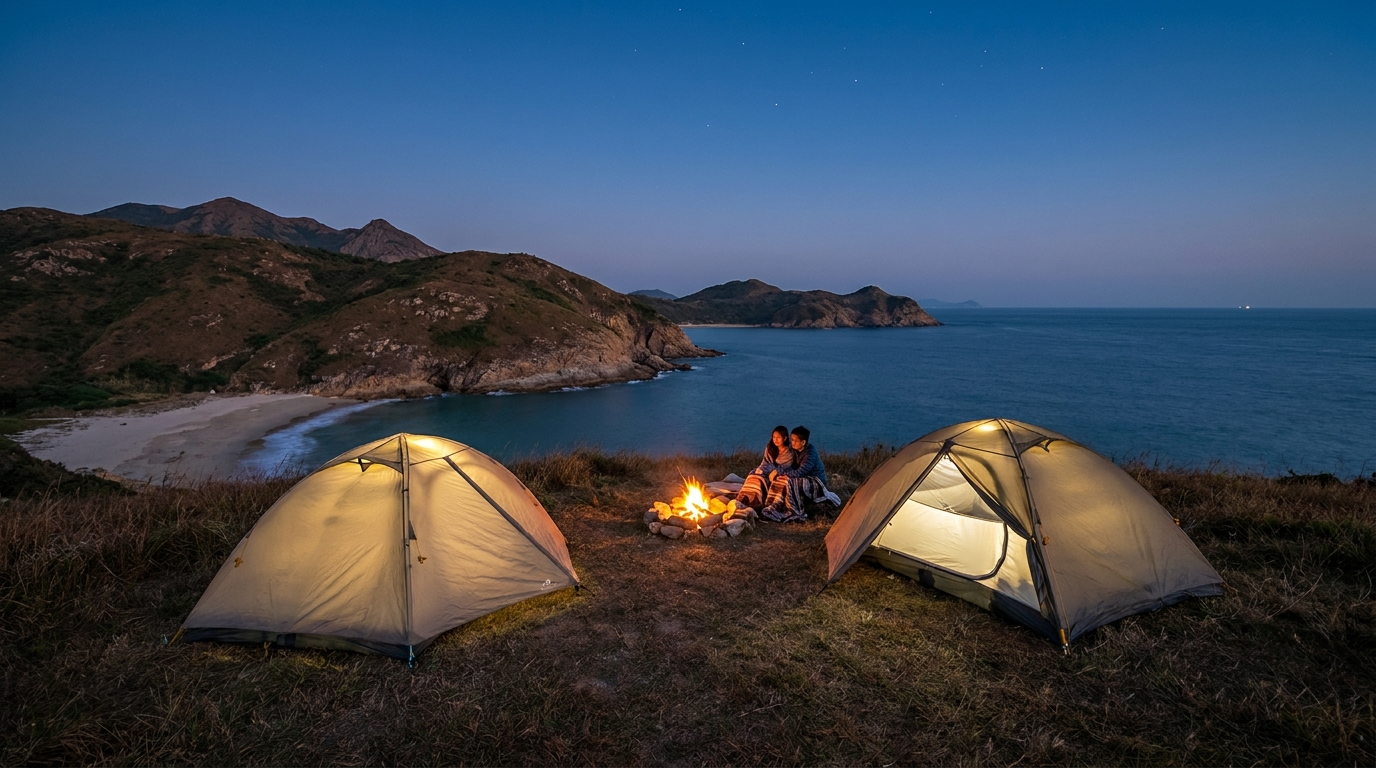
Tap Mun is one of Hong Kong’s classic camping and stargazing destinations. The grassy hilltops make natural, comfortable pitches, and because the island is so far from the city’s glare, the night skies are genuinely dark — on a clear, moonless night you can see a remarkable spread of stars, with the lights of the distant coast twinkling far across the water. Waking to sunrise over the sea, with cattle grazing nearby, is the reward for the effort of getting here.
Because the island is remote and facilities are minimal, come fully prepared: carry all your water, food and gear, and a torch for after dark. For a full packing list and etiquette, see our dedicated camping in Sai Kung guide. Whether you camp or not, plan around the limited ferries.
How to get there
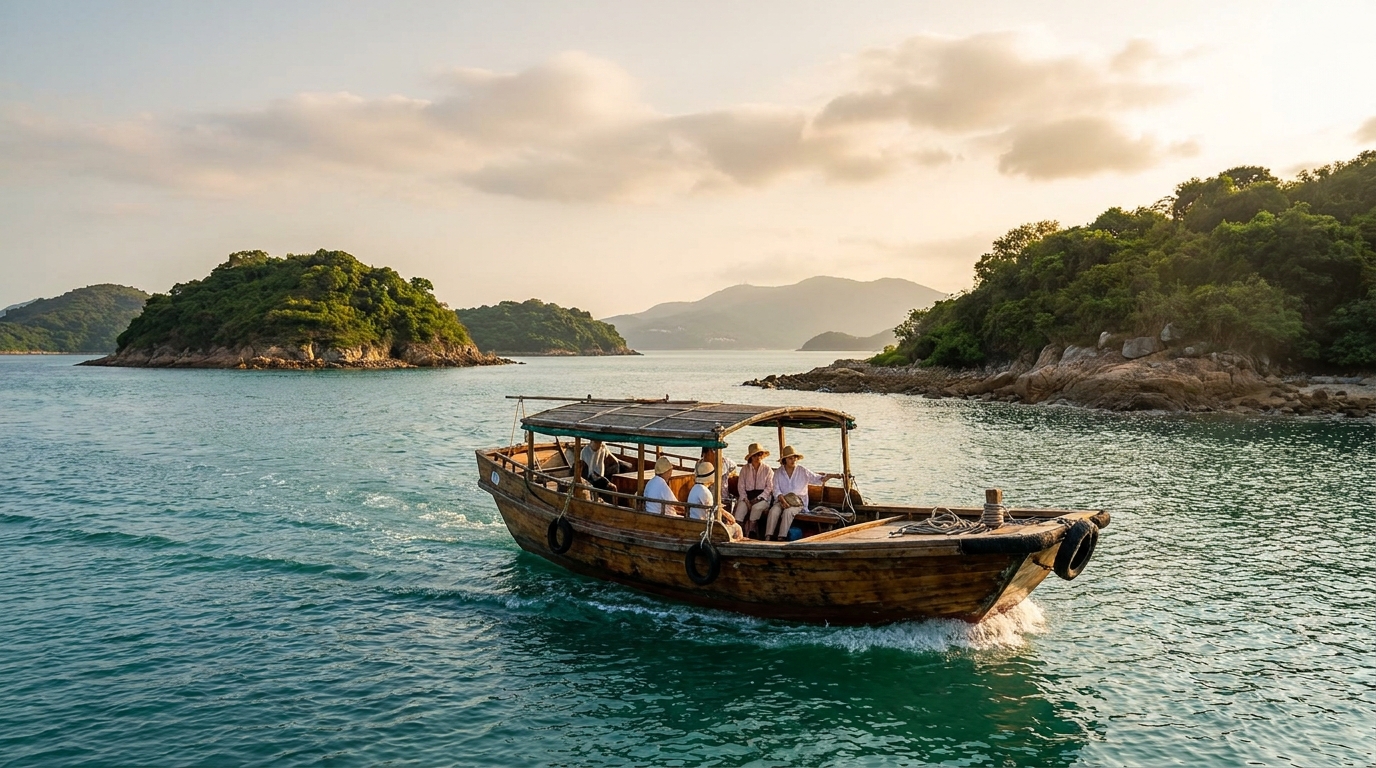
Tap Mun is reached by kaito ferry, and getting there is part of the adventure. There are two main routes:
| Route | From | Notes |
|---|---|---|
| Sai Kung approach | Wong Shek pier (northern Sai Kung Country Park) | Reached overland through Sai Kung; shorter crossing |
| New Territories approach | Ma Liu Shui pier (near University MTR) | Longer, scenic crossing via Tolo Harbour |
Both services run limited sailings, so this is a trip that lives and dies by the timetable. Check the schedule carefully before you go, pay cash, and confirm the time of the last return boat — missing it on a remote island is a real risk. To reach Wong Shek pier you’ll travel through Sai Kung; see our getting around Sai Kung guide for buses within the country park, and the getting to Sai Kung guide for connections from the city.
Best time to visit
Tap Mun is best enjoyed on a clear, dry day in autumn, winter or spring, when the grass is at its most golden, the skies are clean for views and stargazing, and the heat is manageable. Avoid windy or stormy days — the open coast and exposed crossings are no fun in rough weather, and the sea cave becomes genuinely dangerous.
Practical tips and safety
- The island is exposed. Bring sun protection, layers for the wind, and water.
- The eastern coast and sea cave are wild and unprotected — keep well back from cliff edges and slippery rocks, and stay away in big swell.
- Respect the cattle — distance, no feeding, no littering (rubbish can harm them).
- Carry out everything you bring in. There is little infrastructure on the island.
- Plan around the ferry above all else; build in a margin so a delay doesn’t strand you.
Nearby and beyond
A trip to Tap Mun is usually a destination in itself given the travel involved, but it sits naturally within a wider exploration of northern Sai Kung. Combine it with the scenery of the country park around Wong Shek, or round off your day back in Sai Kung Town with a seafood meal. For more island-hopping ideas from the Sai Kung waterfront, our island guides cover everything from quiet escapes to easy family-friendly crossings.
Frequently asked questions
How do I get to Tap Mun?
Tap Mun is reached by kaito ferry — from Wong Shek pier in the northern part of Sai Kung Country Park, or from Ma Liu Shui pier near University MTR. Both run limited sailings, so check the timetable carefully and confirm the last return boat.
Are there really cows on Grass Island?
Yes — Tap Mun is famous for its free-roaming cattle, descendants of farm animals left behind when farming declined. They graze the open grasslands and are a much-loved sight, but are wild animals, so keep your distance and don’t feed them.
Can you camp on Tap Mun?
Yes — the grassy hilltops are one of Hong Kong’s most popular camping and stargazing spots. Come prepared, as facilities are minimal. See our camping guide for what to bring.